
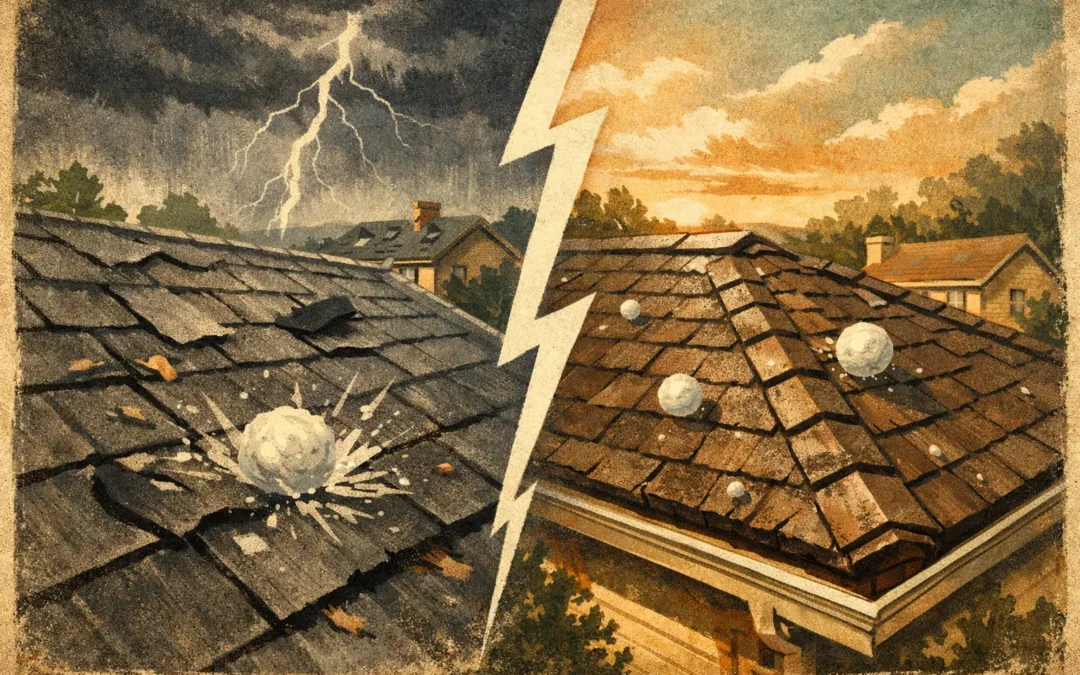
A spring hailstorm can turn a routine roof decision into an urgent one. When comparing asphalt shingles versus impact resistant roofing, the real question is not which product is “best.” It is which roof fits your home, budget, neighborhood exposure, and long-term plans in North Texas.
For homeowners in Mansfield, Midlothian, Waxahachie, and nearby communities, hail is a practical concern. So are high winds, intense summer heat, and sudden temperature changes. A good roofing decision should account for all of them.
What Is the Difference Between These Roof Types?
Standard asphalt shingles are the most common residential roofing material in our area. Many homeowners choose architectural shingles. They offer more depth and durability than basic three-tab shingles. They also come in many colors and price points.
Impact resistant shingles are still asphalt shingles. The difference is how they are built and tested. Many include a reinforced mat, modified asphalt, or added polymer materials. These features help the shingle resist cracking when struck by hail.
The key word is resist. An impact resistant roof is not hailproof. Large hail, repeated impacts, poor installation, or older roofing components can still lead to damage. However, a properly installed impact resistant shingle may be less likely to bruise, crack, or lose granules during a typical hail event.
Understanding Class 3 and Class 4 Ratings
Most impact resistant shingles are rated under UL 2218 testing. This test measures how well roofing materials hold up against simulated impact.
Class 3 and Class 4 are the ratings homeowners will see most often. Class 4 is the highest available rating in this test. It generally offers the strongest impact performance.
That rating matters, but it should not be the only factor. The rating applies to a specific product. It does not automatically describe every part of the completed roof system. Installation quality, roof age, ventilation, flashing, and roof slope still affect performance.
Why North Texas Homeowners Consider Impact Resistant Shingles
Our local weather places real demands on a roof. Hail can arrive quickly. Wind-driven rain can find weak flashing. Summer heat can expose poor attic ventilation and aging shingles.
Impact resistant shingles are often worth considering for homes with frequent storm exposure. They can make sense for long-term owners who want added protection between replacements. They may also appeal to owners of rental homes who want fewer disruption risks.
There can be insurance-related advantages as well. Some carriers may offer premium credits for qualifying Class 3 or Class 4 products. The availability and amount vary by carrier, policy, location, and product documentation. Homeowners should confirm details directly with their insurance provider before making a decision.
A stronger shingle does not replace a careful storm inspection. After a significant hailstorm, it is still wise to have the entire roof evaluated. Damage can occur at vents, soft metals, gutters, flashing, and other areas beyond the shingles.
Asphalt Shingles Versus Impact Resistant: Cost and Value
Standard architectural shingles usually carry a lower upfront cost. For a homeowner selling soon, or replacing a roof on a tighter budget, they can be a sensible and dependable choice.
Impact resistant shingles typically cost more at installation. The price difference depends on the selected brand, shingle style, roof size, roof complexity, and required accessories. Steep roofs, multiple valleys, skylights, and ventilation work can also affect the final estimate.
The better value depends on how long you expect to own the home. If you plan to stay for many years, the added upfront cost may be easier to justify. This is especially true if your neighborhood has experienced repeated hail activity.
If the roof is part of a storm-related insurance claim, material choices should be discussed carefully. Your policy, carrier approval, deductible, and scope of work all matter. A reputable contractor can document visible conditions, explain your options, and help you understand the repair or replacement process. They should never pressure you to make assumptions about claim coverage.
When Standard Architectural Shingles May Be the Right Choice
A standard architectural shingle can be an excellent roof. It is not a second-rate option. The right product, installed correctly, can provide reliable weather protection and attractive curb appeal.
Standard shingles may be the better fit when your roof has limited storm exposure, you need to manage replacement costs, or you expect to move within a few years. They are also a practical choice when you prefer a particular color or design not offered in an impact resistant line.
What matters most is choosing a quality shingle from a trusted manufacturer and pairing it with proper installation. A roof is a system, not just a field of shingles.
When Impact Resistant Shingles Make More Sense
Impact resistant shingles deserve a close look if you have had previous hail claims or visible storm damage. They are also worth considering when you are making a long-term investment in your home.
They can be especially practical for homes with large, open roof areas. Those roofs may receive more direct hail exposure. Homes near open fields or elevated areas can also experience stronger wind effects.
Many homeowners choose them for peace of mind. That is a valid reason, provided expectations are realistic. The goal is improved resistance, not an invincible roof.
Installation Quality Still Determines Roof Performance
The best shingle cannot overcome poor workmanship. A properly built roof needs attention to the details that are easy to overlook from the ground.
Those details include correct underlayment, secure nailing patterns, properly integrated flashing, balanced attic ventilation, and clean transitions around chimneys, pipes, and walls. Wind resistance also depends on using the manufacturer’s required installation method.
Local code requirements can vary by city and change over time. Mansfield, Arlington, Burleson, Waxahachie, and other local jurisdictions may have different permit or inspection procedures. A qualified local contractor should confirm current requirements before work begins.
Ask how the old roof will be removed. Ask how the landscaping and driveway will be protected. Ask who will be on site if a question comes up. Clear answers before work starts prevent stress later.
Compare More Than the Shingle Price
Two estimates can list the same shingle brand and still cover very different work. Homeowners should compare the full scope, not just the total at the bottom.
Look for clear information about these items:
- Tear-off and disposal of existing roofing materials
- Underlayment type and placement
- Flashing replacement at walls, pipes, and roof transitions
- Ventilation improvements, if needed
- Decking inspection and replacement pricing, if needed
- Cleanup procedures and magnetic nail sweeps
- Manufacturer and workmanship warranty terms
A detailed estimate should make the work understandable. Vague language creates room for surprises. Honest contractors explain what is included, what may be discovered after tear-off, and how those conditions will be handled.
Questions to Ask Before Choosing Your Roof
Start by asking which impact rating applies to the exact shingle being proposed. Then ask whether that product is available in the color and style you want. It is also helpful to ask how the roof will be installed for local wind conditions.
Ask about attic ventilation. Excessive heat can shorten shingle life and raise cooling demands. A replacement is often the right time to correct ventilation issues that have been present for years.
Finally, ask who will stand behind the work after the crew leaves. Storm-chasing companies may appear after a hail event, then disappear when follow-up service is needed. Local accountability matters when a small repair or warranty question arises years later.
Accent Roofing has served North Texas homeowners with honesty and integrity since 1980. A careful roof evaluation can help you choose between standard architectural shingles and impact resistant options without pressure or confusion.
The right roof should fit your home before the next storm arrives. Choose the material that supports your plans, then choose a contractor prepared to stand behind the installation.