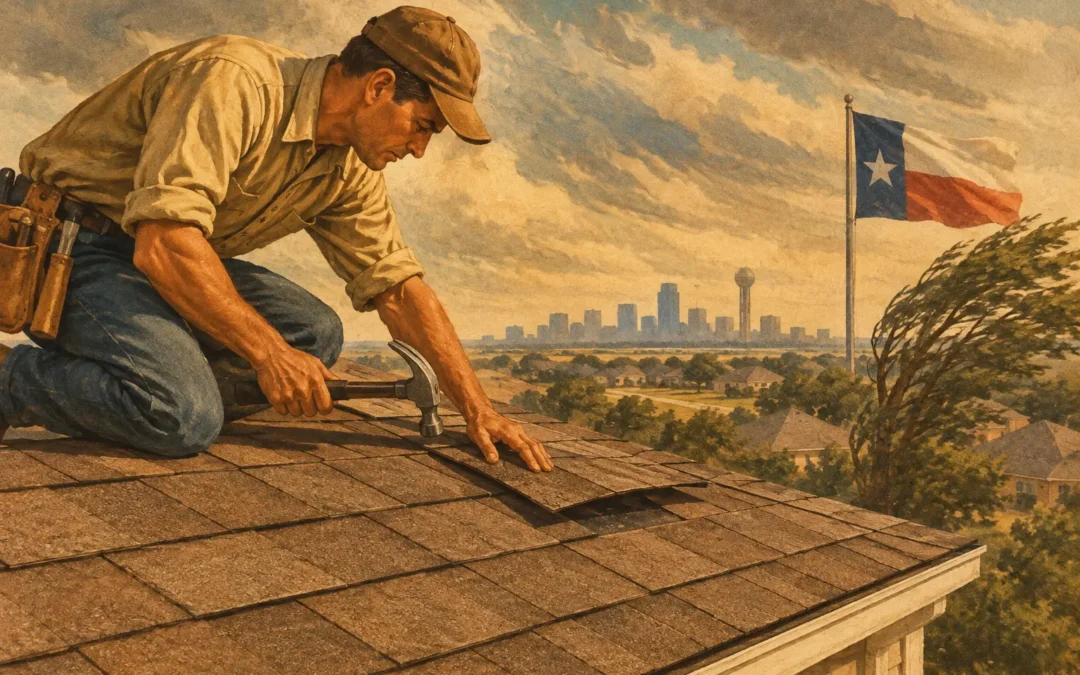
A few lifted tabs can become a much larger problem after one hard North Texas storm. To prevent shingle wind uplift, your roof needs more than shingles that look good from the street. It needs the right materials, correct installation, sound decking, and regular attention before storm season exposes a weakness.
Wind damage does not always start with a dramatic missing section. Often, it begins at an edge, ridge, or pipe penetration. Once wind gets beneath a shingle, it can break the seal and pull at nearby shingles. That creates a path for rain, debris, and future wind damage.
Why Shingles Lift in North Texas
Homes in Mansfield, Midlothian, Waxahachie, and nearby communities face fast-moving thunderstorms, strong straight-line winds, and hail-producing systems. These events can place sudden pressure on roof edges and exposed slopes. South-facing and west-facing roof sections often receive more heat, too. Years of Texas sun can dry shingles and weaken their adhesive seals.
Wind uplift occurs when air pressure gets under the roofing material. The wind then pulls upward against the shingle fastening and seal strip. A properly installed roof resists that force as a complete system. A roof with brittle shingles, poor nail placement, or weak flashing has more vulnerable points.
Age matters, but age is not the only factor. A newer roof can lift during a storm if the shingles were installed incorrectly. An older roof may remain secure if it was installed well and maintained carefully. A qualified inspection looks at the actual condition rather than making assumptions based on the roof’s age.
How to Prevent Shingle Wind Uplift Before Storms
The best time to address wind resistance is before shingles start lifting. Routine maintenance allows small concerns to be corrected while repairs remain focused and manageable.
Keep Roof Edges Secure
Roof edges are usually the first area exposed to wind pressure. Drip edge metal helps guide water away from the roof edge. It also supports the roofing assembly at a vulnerable transition.
Loose edge shingles deserve prompt attention. So do bent, missing, or poorly secured drip edges. Wind can catch a small exposed area and turn it into a larger tear during the next storm.
Ridge caps need the same attention. These shingles cover the peak of the roof. If ridge caps crack, loosen, or lose their seal, wind can begin pulling from the highest point of the roof.
Make Sure Fasteners Are Correct
Nails hold shingles in place, but placement is just as important as quantity. Nails driven too high can miss the reinforced nailing area. Nails driven too low can leave exposed holes. Overdriven nails can cut through the shingle surface. Underdriven nails can keep shingles from lying flat.
These details may be hidden from view. That is why a roof should be inspected by a trained professional when there are signs of wind damage. A contractor can evaluate lifted sections and determine whether a localized repair is appropriate.
Protect the Roof Deck
Shingles are only as secure as the decking beneath them. Soft, rotten, or delaminated decking cannot hold fasteners properly. Water intrusion around a vent, chimney, or old repair can weaken decking over time.
During a roof replacement, damaged decking should be identified and repaired before new materials are installed. Covering a weak deck with new shingles does not solve the underlying problem. It can also shorten the life of the new roof.
Maintain Flashing and Roof Penetrations
Plumbing vents, attic vents, chimneys, skylights, and wall intersections all interrupt the roof surface. Each requires properly installed flashing and sealing. When these areas loosen, wind-driven rain can enter even when most shingles appear intact.
Pay attention to loose flashing, cracked pipe boots, exposed nail heads, and aging sealant. These concerns may not cause uplift directly. However, they can allow moisture into the roof system. That moisture can weaken materials and make later storm damage worse.
Choose Materials That Fit the Roof and Local Conditions
A roof replacement offers the best opportunity to improve wind resistance. The right shingle is only one part of that decision. Underlayment, starter shingles, ridge materials, ventilation, flashing, and fastening methods all work together.
Many homeowners ask whether a higher wind-rated shingle is always the best choice. It depends on the roof design, budget, existing deck condition, and manufacturer requirements. A premium shingle can be a good investment. Still, its rated performance depends on installation that follows the manufacturer instructions.
Ask your contractor to explain the full roofing system. You should understand what materials are proposed and why. A clear estimate should identify major components, anticipated repairs, and any conditions that could affect the final scope.
Local permit requirements and adopted building standards can vary by city. Homes in Southern Tarrant County, Ellis County, Johnson County, and Southern Dallas County may not all follow the same local process. An established local contractor should account for the requirements that apply to your property rather than using a one-size-fits-all approach.
Warning Signs After a Windstorm
Do not climb onto the roof after a storm. Wet surfaces, loose shingles, and hidden damage create real safety risks. A ground-level review can still help you spot changes that warrant a professional inspection.
Look for these signs around the home:
- Shingles in the yard, driveway, or landscaping
- Curled, lifted, creased, or missing shingle tabs
- Loose ridge caps or metal flashing
- Granules collecting near downspouts
- Water stains on ceilings or walls
- New drips in the attic after rainfall
Not every issue is visible from the ground. Wind can break the seal beneath a shingle without removing it. That shingle may look normal until the next storm pulls it farther back. A timely inspection can identify these less obvious concerns.
When a Repair Can Help and When Replacement Makes Sense
A targeted repair may be a sensible option when damage is limited to a small area. This is often true when the surrounding shingles remain flexible, well-adhered, and in good condition. Replacing a few damaged shingles and correcting a loose flashing detail can help restore protection.
Replacement may be the wiser choice when shingles are brittle across the roof, widespread seals have failed, or previous repairs have created a patchwork appearance. It may also make sense when repeated wind damage reveals deeper installation or decking concerns.
The goal should not be to sell more roof than a home needs. It should be to make an informed decision with a clear view of the roof’s condition. A dependable contractor explains the trade-offs. They should show you the damage, discuss practical options, and answer questions without pressure.
Avoid Shortcuts That Create Future Wind Problems
Some roofing shortcuts may look acceptable at first. They rarely perform well through multiple Texas storm seasons. Installing new shingles over compromised materials, skipping necessary deck repairs, or relying heavily on sealant can leave weak points behind.
Be cautious of any contractor who cannot explain their installation process. Ask how they handle starter shingles, drip edges, flashing, ventilation, decking repairs, and cleanup. You should also receive a written estimate before work begins.
After a major storm, homeowners may hear from contractors who have no lasting presence in the area. A local, established company has a reputation to protect long after the weather clears. That accountability matters when you need follow-up service or have questions about completed work.
A Practical Plan for Wind-Resistant Roofing
A simple annual roof check can prevent a small issue from becoming an urgent leak. Schedule an inspection after major wind or hail events. Clear leaves and branches from valleys and gutters. Trim limbs that rub against the roof. Address lifted shingles and damaged flashing as soon as they are found.
If your roof is nearing the end of its useful life, plan ahead when possible. A planned replacement allows time to compare material options, review the estimate, and make decisions without the pressure of an active leak. If storm damage is involved, document visible concerns and speak with your insurance carrier about your policy and next steps.
Accent Roofing has served North Texas homeowners with honesty and integrity since 1980. For families facing roof concerns, the right next step is a straightforward inspection and clear answers. A roof should give your home steady protection, especially when the forecast turns rough.