
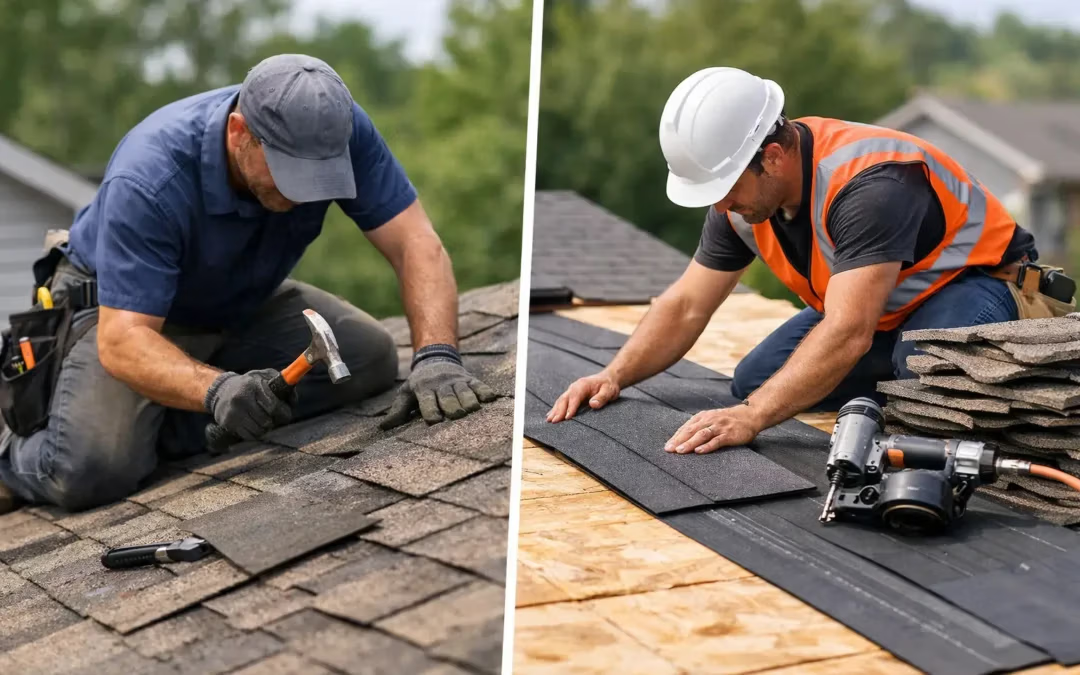
A small ceiling stain after a North Texas storm can turn into a much bigger question fast: should I repair or replace roof systems on my home, rental, or commercial property? The right answer depends on more than the leak you can see. It comes down to the roof’s age, how widespread the damage is, whether storms have shortened its life, and how much money makes sense to put into a system that may already be near the end.
For many property owners in Waxahachie and across DFW, this is where frustration starts. One contractor says a patch will do. Another says the whole roof has to go. The truth is, both can be right depending on the condition of the roof. A dependable roofer should be able to explain the difference clearly, without pressure, and help you make a decision that protects your property for the long haul.
Should I repair or replace roof damage after a storm?
Storm damage is one of the biggest reasons this question comes up in North Texas. Hail, high winds, heavy rain, and flying debris can leave behind obvious problems like missing shingles, torn flashing, or dented vents. They can also cause less visible damage that weakens the roof over time.
If the storm damage is limited to one area and the rest of the roof is still in solid condition, a repair may be the smart move. Replacing a few shingles, resealing flashing, or correcting a localized leak can extend the life of the roof without the cost of full replacement. That is especially true if the roof is relatively new and the materials still have plenty of service life left.
A replacement becomes more likely when the damage is spread across multiple slopes, when shingles have lost significant granules, or when wind and hail have affected the integrity of the whole roofing system. In those cases, a repair may only buy a little time while leaving larger issues in place. If your insurer is involved, documentation matters. A contractor with claim experience can help you understand whether the damage supports a repair claim or a full replacement claim.
When a roof repair makes sense
Roof repair is often the right choice when the problem is specific, recent, and contained. A pipe boot may have cracked. Flashing around a chimney may have lifted. A few shingles may have come loose after a wind event. Those are real issues, but they do not always mean the whole roof has failed.
A repair also makes sense when the roof is still in the earlier or middle years of its expected lifespan. If an asphalt shingle roof is well under its typical service life and has been maintained reasonably well, it is usually worth fixing isolated trouble spots. The same is true for many commercial roofs where the membrane is still sound and the issue is tied to seams, penetrations, or drainage details.
Timing matters too. Catching a problem early often keeps a repair from turning into a replacement. A minor leak can stay minor for only so long. Once water gets into decking, insulation, ceilings, or framing, the cost starts climbing and the roof system may no longer be the only thing that needs work.
Signs replacement is the better investment
Sometimes a roof tells you plainly that repairs are becoming temporary fixes. If leaks keep returning in different areas, shingles are curling or balding, or the roof line is showing signs of sagging, replacement deserves a serious look. You can keep putting money into patches, but that does not always add value if the system is worn out overall.
Age is one of the clearest factors. Even a roof without a dramatic active leak can be near the end of its useful life. In North Texas, intense sun, heat swings, hail, and wind can wear roofing materials faster than many property owners expect. An older roof may not have enough remaining life to justify repair costs, especially if several components are failing at the same time.
Replacement is also usually the better path when repairs would affect a large percentage of the roof. Once the damaged area grows beyond a small section, patching becomes less practical. Matching older shingles can be difficult, and blending repairs into a weathered roof is not always possible. In those situations, replacement often delivers better protection, a cleaner appearance, and fewer repeat service calls.
The cost question: repair now or pay more later?
Many owners start with price, and that is understandable. A repair almost always costs less upfront than a full replacement. But the lower immediate cost does not always mean it is the better financial decision.
If you are repairing a roof that still has years of life left, that money is usually well spent. If you are repairing a roof that is already failing in several areas, the savings may be short-lived. You could pay for leak repairs now, interior damage later, and replacement sooner than expected anyway.
The better way to think about cost is value over time. Ask how long the repair is likely to last, whether it addresses the real source of the problem, and what risks remain if you postpone replacement. A trustworthy estimate should explain that in plain language. It should not treat every roof like it needs replacing, but it also should not downplay warning signs just to win a quick repair job.
Should I repair or replace roof systems on older homes?
Older homes around Waxahachie and the DFW area often come with roofing decisions that are not simple. A house may have added layers, past repairs, ventilation issues, or decking concerns hidden beneath the shingles. What looks like a basic leak from inside may point to a larger system problem above.
In older homes, replacement is often the safer route when the roof has a long history of patchwork or when underlying materials have deteriorated. Once decking softens or ventilation has been poor for years, surface repairs cannot fully solve the issue. A replacement gives the opportunity to correct the roof as a system, not just cover over symptoms.
That said, not every older home needs a new roof right away. Some have isolated damage on roofs that were installed more recently than the house itself. That is why inspection matters. The condition of the current roof matters far more than the age of the home alone.
What a professional inspection should tell you
A solid roof inspection should do more than point at a leak. It should evaluate shingles or membrane condition, flashing, penetrations, ventilation, drainage, decking concerns, and signs of storm impact. It should also consider whether problems are localized or widespread.
You should come away with a clear understanding of three things: what is wrong today, what could happen next if nothing is done, and whether repair or replacement makes better sense based on the roof’s remaining life. If a contractor cannot explain that simply, keep asking questions.
At Accent Roofing, this has always been the practical approach – honest guidance based on what the roof actually needs, not what sounds like the biggest job. For homeowners and property owners, that kind of straight answer matters when the stakes are high.
A few situations where the answer is not black and white
Some roofs sit in the middle. They are aging, but not completely worn out. They have damage, but not enough to make replacement an easy call. That is where experience matters most.
If you plan to sell soon, a repair may be enough if it resolves active issues and the roof still presents well. If this is your long-term home, replacement may make more sense because it reduces future stress and expense. If insurance will cover a large share of storm-related replacement, the math may shift. If it will not, a well-executed repair could be the right move while you plan ahead.
Commercial properties have their own version of this decision. Tenant disruption, budgeting cycles, coating options, drainage performance, and maintenance history all play a role. A repair may protect the asset now, while a phased replacement plan protects cash flow over time.
The best answer is rarely based on one factor alone. It comes from balancing condition, risk, budget, and how long you need the roof to perform.
When you are facing the question, should I repair or replace roof concerns on your property, do not settle for a rushed opinion. Get a clear inspection, ask for plain answers, and choose the option that gives you confidence the next time a North Texas storm rolls through.