
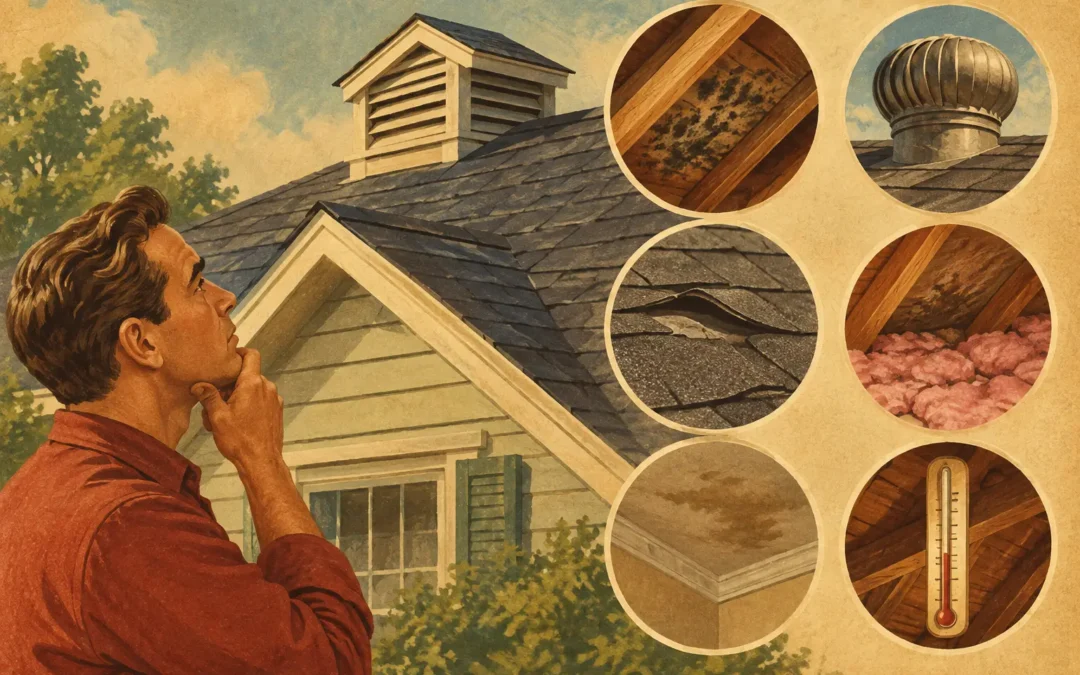
A sweltering upstairs room can feel like a Texas summer problem. Sometimes, it is a roof ventilation problem. The warning signs of poor roof ventilation often begin quietly. They may appear in the attic, on your shingles, or on monthly energy bills.
North Texas roofs face hard conditions. Long stretches of heat, sharp temperature swings, thunderstorms, hail, and humid rain all affect the roofing system. Your attic needs a balanced path for fresh air to enter and hot, moist air to leave. When that airflow fails, heat and moisture stay trapped where they can do real damage.
Why Roof Ventilation Matters in North Texas
Your roof is more than shingles and decking. It is a system. Insulation, intake vents, exhaust vents, decking, and roof coverings must work together.
During a Mansfield summer, attic temperatures can climb far above the outdoor temperature. Good ventilation helps release that heat. It also helps manage moisture during cooler, damp periods.
Ventilation does not make an attic cold. It does help prevent extreme heat buildup. It also supports the expected service life of roofing materials. Poor airflow can strain your HVAC system and make indoor rooms less comfortable.
A proper system usually includes intake ventilation near the eaves and exhaust ventilation near the ridge. The exact design depends on the roof shape, attic layout, insulation, and local building requirements. More vents are not always better. Balanced airflow matters most.
Warning Signs of Poor Roof Ventilation
1. Upstairs Rooms Stay Hot
A hot second floor is one of the most common clues. The issue is especially noticeable during late afternoons. Your air conditioner may run longer, yet bedrooms remain uncomfortable.
This symptom does not prove a ventilation issue by itself. Leaky ducts, weak insulation, aging windows, and undersized HVAC equipment can also contribute. Still, an overly hot attic deserves a closer look.
2. Your Attic Feels Extremely Hot or Stuffy
A warm attic is normal in summer. An attic that feels intensely hot and stagnant may not be moving air correctly. You may notice a heavy, stale feeling when you open the access hatch.
Never walk through an attic without safe footing. Avoid stepping between joists. If you are unsure, let a qualified roofing professional inspect the space safely.
3. Shingles Look Curled, Cracked, or Prematurely Worn
Trapped attic heat can raise the temperature of the roof deck and shingles. Over time, that added stress may contribute to curling edges, cracking, blistering, or uneven wear.
Storm damage can create similar symptoms. Hail strikes, wind lift, and age must be considered too. A roof inspection should identify the cause before any repair decision is made.
4. Moisture, Stains, or Mold Appear in the Attic
Moisture is a serious concern. Look for dark staining on roof decking, damp insulation, rusty nail tips, or a musty smell. These signs can point to condensation, a roof leak, or both.
A leak needs prompt attention. So does recurring condensation. Leaving either issue alone can damage decking and insulation. It may also create conditions that support mold growth.
5. Frost or Water Droplets Form During Cold Weather
North Texas winters are usually mild, but cold snaps happen. Warm household air can enter the attic through gaps around lights, vents, and attic accesses. When it meets cold roof decking, condensation can form.
You may see droplets on nails or damp wood after a cold spell. That moisture is not always caused by poor ventilation alone. Air sealing and insulation often need attention as well.
6. High Energy Bills Have No Clear Explanation
Energy costs rise during extreme weather. That is expected. However, a sudden or lasting increase may point to a problem in the attic system.
When attic heat builds up, your cooling equipment works harder. Poor ventilation can be part of that picture. An HVAC professional may need to assess equipment performance, while a roofer reviews airflow and roof components.
7. Insulation Looks Damp, Flattened, or Uneven
Insulation should stay dry and properly distributed. Damp insulation loses effectiveness. Compressed or disturbed insulation can also leave gaps where conditioned air escapes.
Bathroom fans should vent outdoors, not into the attic. Dryer vents must also terminate outside. Exhausting moist air into an attic can mimic a roof ventilation failure and cause major moisture problems.
8. Ice-Related Roof Problems Appear After Rare Freezes
Ice dams are less common here than in colder climates. Yet they can occur after unusual winter weather. Heat escaping into the attic can warm the roof unevenly. Melted snow or ice may refreeze near colder roof edges.
If this happens, do not assume ventilation is the only cause. Insulation levels and air leaks are often involved. A full assessment gives you a clearer answer.
Problems That Can Look Like Poor Ventilation
Roof concerns often overlap. That is why a quick guess can lead to the wrong repair. Missing shingles, damaged flashing, clogged gutters, attic air leaks, and insufficient insulation can produce similar symptoms.
A roof replacement also creates an opportunity to review ventilation. However, replacement is not automatically necessary. Sometimes a targeted repair, corrected exhaust vent, or improved intake ventilation is the practical solution.
Be cautious with powered attic fans. They can help in certain designs. In other homes, they may pull conditioned air from the living space. Their value depends on the whole attic system, not a single product claim.
What Homeowners Can Check Safely
You do not need to climb onto the roof. Start from the ground and inside the home. Look for visible shingle changes, sagging rooflines, attic stains, or rooms that stay unusually hot.
You can also check a few basic items:
- Confirm bathroom and laundry exhaust vents lead outside.
- Look for obvious moisture or staining near the attic hatch.
- Notice whether soffit vents are blocked by paint, debris, or insulation.
- Track comfort changes and unusual energy use over several months.
Do not cover or block roof vents yourself. Improper changes can disrupt airflow or create leak points. A professional should verify the intake and exhaust balance before modifications are made.
When to Schedule a Roof Inspection
Call for an inspection if you find attic moisture, recurring stains, damaged shingles, or persistent heat upstairs. It is also wise to have the roof checked after a major hail or wind event. Storm damage can affect vents, flashing, and shingles at the same time.
A thorough inspection should not be a sales pitch. You deserve clear findings and practical options. Ask what is causing the issue, what repair is recommended, and whether other home systems should be reviewed.
For homeowners in Mansfield and nearby North Texas communities, Accent Roofing brings local experience built since 1980. Our team can evaluate visible roof conditions, ventilation components, and storm-related concerns with straightforward communication. If an insurance claim may be involved, we can help document roof damage and explain the repair process without making promises about coverage.
Your attic should not be an afterthought. A timely inspection can protect your roof, improve comfort, and help you make a calm decision before a small issue becomes a larger repair.