
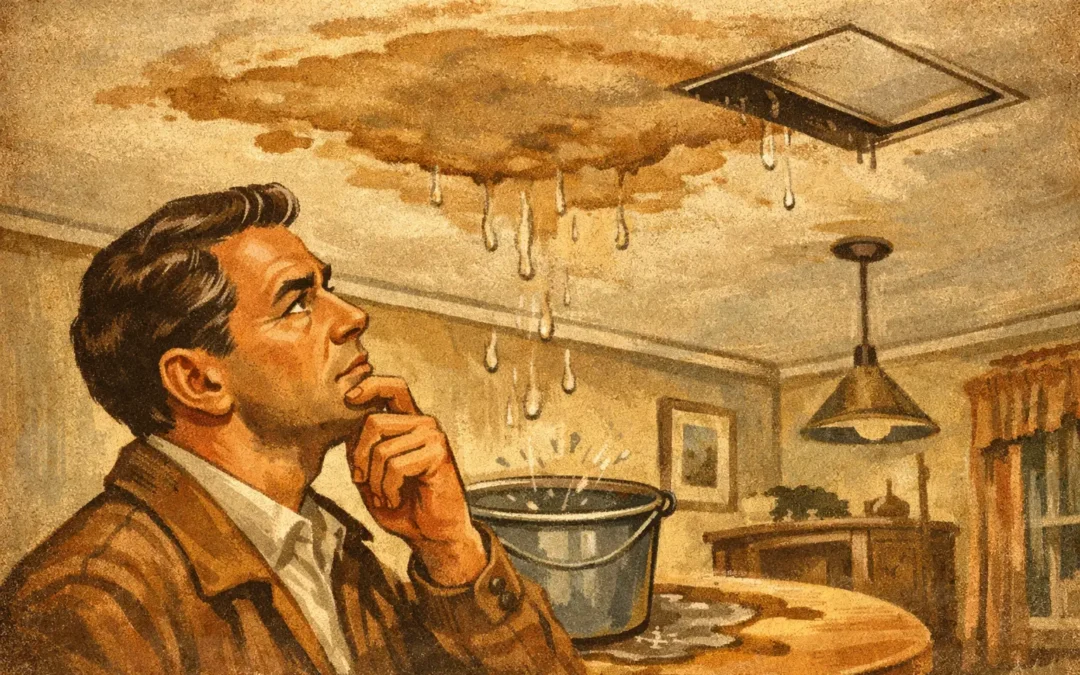
A brown ring above the living room is rarely just a cosmetic problem. Ceiling water stains often appear after water has traveled through roofing, attic materials, or framing. The visible mark may be small. The source may not be.
For North Texas homeowners, timing matters. Heavy spring rain, hail, wind-driven storms, and long summer heat can expose weak spots in an aging roof. A quick inspection can often prevent damaged insulation, sagging drywall, mold growth, and a larger repair bill.
What Ceiling Water Stains Can Tell You
A ceiling stain tells you that moisture reached the drywall. It does not always identify the source. Water can travel along roof decking, rafters, pipes, or ductwork before it reaches the ceiling. That is why the stain’s location is useful, but not conclusive.
A stain near an exterior wall or below a roof valley may point to a roofing issue. Missing shingles, damaged flashing, worn pipe boots, or storm damage can let water enter. Valleys and roof penetrations deserve close attention. They handle concentrated water flow during hard rain.
A stain below a bathroom, laundry room, or upstairs kitchen can indicate plumbing. A slow pipe leak may worsen gradually. A stain that appears after someone uses a shower is another important clue.
HVAC equipment can also be responsible. Condensation lines, drain pans, and poorly insulated ductwork may create moisture issues. This is more common during long periods of heavy air conditioner use.
The key is to avoid guessing. Repairing the stain without finding the moisture source only hides the problem.
When a Stain Is an Urgent Problem
Some ceiling water stains can wait for a scheduled inspection. Others need same-day attention. Watch for changes in the ceiling’s shape, texture, or color.
Take immediate steps if you notice any of these warning signs:
- A ceiling area is soft, swollen, or sagging.
- Water is actively dripping or running down a wall.
- The stain grows during or after rainfall.
- Paint is bubbling, peeling, or separating from drywall.
- You smell mildew or see dark spotting nearby.
- The stain is close to a light fixture or electrical outlet.
Stay clear of a bulging ceiling. Water adds significant weight to drywall. Do not stand beneath it or try to repair it yourself. If water is near electricity, turn off power to that area only if it is safe to do so. Then contact the appropriate professional promptly.
If the leak follows a storm, document what you see. Take clear photos of the ceiling, any dripping water, and visible exterior damage from the ground. Notes about when the stain appeared can also help. A roofing contractor can assess the roof condition and explain the findings in plain language. For plumbing or HVAC sources, a qualified technician should inspect those systems.
How to Narrow Down the Source
Start with the pattern. Did the stain appear after a hard rain? Did it develop during a cold spell or after several weeks of air conditioner use? Did it show up near a bathroom after regular use? These details help identify the next step.
A roof-related stain often becomes worse after rain. In Mansfield, Midlothian, Waxahachie, and nearby communities, wind-driven rain can push water beneath damaged shingles or loose flashing. Hail may bruise shingles without creating an obvious hole. The roof can look normal from the yard while still allowing moisture inside.
Look for visible clues from the ground. Check for missing shingles, exposed roof areas, lifted ridge caps, or debris around roof valleys. Do not climb onto the roof. Wet surfaces, damaged shingles, and steep areas create unnecessary risk.
Inside the attic, only inspect if it is dry and safely accessible. Look for wet insulation, dark wood, rusty nail tips, or damp roof decking. Remember that the wet spot may sit several feet from the ceiling stain. Water follows gravity, framing, and the easiest available path.
If no rain occurred, think beyond the roof. Check whether the stain sits under plumbing fixtures or HVAC equipment. A dependable contractor should tell you when the roof is not the cause. Honest diagnosis protects your home and your budget.
Why North Texas Roofs Need Close Attention
North Texas weather puts roofing systems through repeated stress. Intense sunlight can dry and age shingles. Sudden temperature shifts can affect sealants and flashing. Severe thunderstorms bring wind, hail, and heavy rainfall that can exploit minor weaknesses.
Older roofs deserve extra attention after severe weather. Materials do not last forever. Sealant around penetrations can dry out. Pipe boots can crack. Flashing can loosen over time. These are repairable issues when caught early.
A leak does not always mean you need a full roof replacement. It depends on the roof’s age, the type of damage, and the condition of the surrounding materials. A localized flashing repair may solve one problem. Widespread storm damage or a worn-out system may justify a broader conversation.
That distinction matters. Homeowners deserve recommendations based on the roof’s actual condition, not a high-pressure sales pitch.
What to Do Before Help Arrives
Your first goal is limiting interior damage. Move furniture, rugs, and electronics away from the affected area. Place a container under active drips. Protect flooring with towels or plastic sheeting if needed.
Avoid these common mistakes:
- Do not paint over the stain before inspection.
- Do not place a ladder on wet or unstable flooring.
- Do not climb onto the roof during rain or high winds.
- Do not assume a dry ceiling means the problem is gone.
A leak can stop temporarily when the weather clears. Moisture may still remain in insulation, framing, or drywall. Prompt assessment helps determine whether drying, repairs, or material replacement is needed.
If your roof was affected by a recent storm, you may choose to contact your insurance carrier. Keep your documentation and ask questions about your policy’s process. A local roofing contractor can provide damage information and help you understand the repair scope. They should never pressure you to make decisions before you have clear facts.
Preventing Future Ceiling Water Stains
The best prevention is regular attention before water appears indoors. Have your roof checked after major hail or wind events. Schedule periodic maintenance for aging roofs. Keep gutters and roof valleys clear enough for water to drain properly.
Pay close attention to roof penetrations. Vents, plumbing pipes, skylights, chimneys, and wall transitions require properly installed flashing and sealants. These areas often need maintenance before the main roofing field does.
Inside the home, address small plumbing drips and HVAC drainage issues quickly. Make sure attic ventilation is working as intended. Good ventilation helps manage heat and moisture, which supports the roof system and attic materials.
A quality inspection should give you usable answers. You should know where the issue is, what caused it, what repair is recommended, and whether other concerns were found. You should also receive clear pricing before work begins.
Accent Roofing has served North Texas homeowners with honesty and integrity since 1980. If rain has revealed a possible roof leak, an experienced local inspection can replace uncertainty with a practical plan. The sooner you identify the source, the easier it is to protect the home your family depends on.