
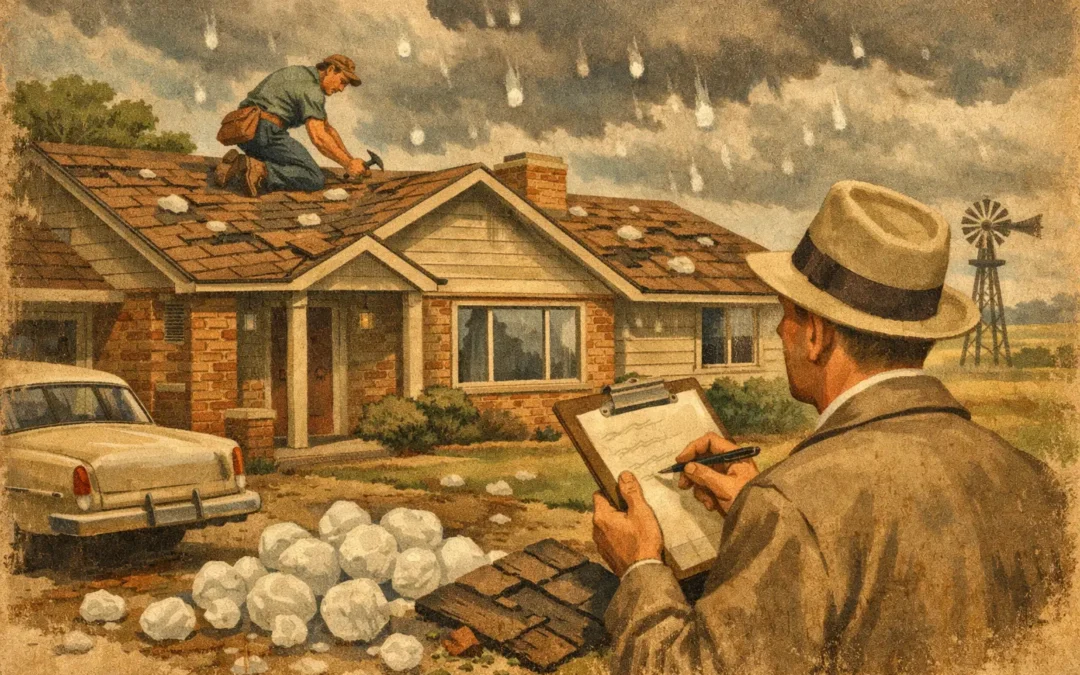
A hail damage roof claim example can make a stressful process feel more manageable. After a North Texas storm, homeowners often see scattered granules, dented gutters, or damaged screens. What they cannot see is just as important. Hail can bruise shingles, weaken their protective surface, and shorten the roof’s useful life.
For families in Mansfield, Midlothian, Waxahachie, and nearby communities, the right first step is not signing with the first contractor who knocks. It is getting clear documentation. Then, you can make informed decisions with your insurer and a trusted local roofer.
A Hail Damage Roof Claim Example, Step by Step
Consider a homeowner in Ellis County after a spring hailstorm. The home has a 12-year-old architectural shingle roof. The owner notices dents in aluminum gutters and several window screens with small tears. From the ground, the roof looks mostly normal.
A qualified roofing inspection finds impact marks across multiple roof slopes. The marks are not simply cosmetic. Each hail strike has displaced granules and compressed the asphalt beneath. The inspector also finds damaged ridge caps and exposed impact marks on soft metal roof components.
The homeowner takes photos of the gutters, screens, downspouts, and any visible roof debris. They also save the storm date and collect the inspection findings. With this information, they contact their insurance carrier to report possible hail damage.
The carrier opens a claim and schedules an adjuster inspection. The roofing contractor meets the adjuster when requested. Their role is to point out documented damage and discuss the scope of roofing work. They do not decide coverage. The insurer makes that decision under the homeowner’s policy.
After the inspection, the insurer sends an estimate. It may include line items for shingle removal, underlayment, starter shingles, ridge caps, vents, flashing, and debris disposal. It may also include repair work for gutters or other affected exterior items.
The homeowner should read that estimate carefully. A claim estimate is not always the same as a complete roofing proposal. The roof size, materials, waste allowance, ventilation, and code-related items must match the actual home. If an item is missing or the measurements appear incorrect, the contractor can document the issue and submit supporting information for review.
This is the key lesson from any hail claim example: the process works best when every visible condition is documented, explained, and handled in writing.
What a Roofing Claim Estimate May Include
Insurance estimates use specialized terms. They can look complicated, even when the scope is reasonable. A dependable contractor should explain each section in plain language.
For a full replacement, the estimate may include tear-off of the existing roofing, installation of new shingles, underlayment, starter material, ridge caps, vents, flashing work, and cleanup. It may also address drip edge, pipe flashings, valley materials, or steep-roof labor when applicable.
Some estimates show replacement cost value and actual cash value. Those labels can affect how payments are issued. Depreciation, deductibles, and policy terms can also affect the homeowner’s out-of-pocket responsibility. Every policy is different. Your insurance carrier or agent is the right source for questions about policy benefits and coverage decisions.
Do not assume an approved claim covers every upgrade you may want. For example, a homeowner may choose a higher-grade shingle or a different color. Those choices can involve costs beyond the approved scope. A clear contractor will separate insurance-related work from optional upgrades before construction begins.
Documentation That Helps Support the Claim
Good documentation does not guarantee a claim outcome. It does, however, give the insurer a clearer record to review. It also helps prevent confusion later.
Keep these items together in one folder:
- Photos of dents, torn screens, fallen debris, and visible roof concerns.
- The storm date and notes about what you observed.
- A professional inspection report with photos and marked roof areas.
- Your insurer’s claim number, adjuster contact details, and estimate.
- Written contractor proposals and any revised scope documentation.
Take photos safely from the ground. Do not climb onto a wet, steep, or damaged roof. North Texas roofs can become especially hazardous after storms, when loose granules and damp shingles reduce footing.
If leaks begin after hail, take photos of interior staining and protect belongings. Use a bucket or temporary covering when safe. Then arrange a prompt inspection. Waiting can allow a small opening to create larger ceiling, insulation, or framing concerns.
Why the First Estimate May Need Review
An adjuster’s estimate is based on the conditions visible during their inspection. A roofing contractor may later identify items that were hidden, inaccessible, or difficult to confirm at the first visit. That does not automatically mean the original estimate was wrong. It means the scope may need more documentation.
For example, the estimate may include basic shingles but omit ridge vent replacement. Or it may not account for damaged flashing discovered when old materials are removed. In some cases, local building requirements may affect how the new roof is installed.
Requirements can differ by municipality and project conditions. Homes in Mansfield, Arlington, Waxahachie, and surrounding service areas may have different permitting or inspection procedures. A local contractor should follow applicable requirements for the property and communicate any needed changes before work proceeds.
If additional work is warranted, the contractor can prepare photos, measurements, and a written explanation. The insurer then reviews that information. Homeowners should avoid verbal-only promises. Clear paperwork protects everyone involved.
Questions to Ask Before You Sign
Storm damage often brings unfamiliar contractors into the neighborhood. Some are capable professionals. Others leave town once the storm work slows down. A roof replacement deserves a contractor who will answer the phone after the final check is written.
Ask how long the company has served your area. Ask whether they carry appropriate insurance and whether they will provide a detailed written estimate. Ask who will supervise the worksite and how they will protect landscaping, driveways, and outdoor equipment.
You should also ask how the contractor handles supplements or scope differences. The answer should be simple. They should document the issue, explain it to you, and submit it for insurer review when appropriate. Be cautious if anyone tells you that your deductible does not matter. Texas homeowners are responsible for understanding and paying their deductible obligations.
A trustworthy roofer will never pressure you to sign immediately. They will give you time to review the agreement, ask questions, and compare the scope to your insurer’s paperwork.
The Homeowner’s Role During Construction
Once the scope is settled, confirm the material selection, work date, and payment schedule in writing. Move vehicles from the driveway. Secure patio furniture and protect fragile items in the attic. Roofing is noisy, and vibration can shift loose wall hangings.
During the project, expect crews to remove old materials and install the new system in stages. A clean jobsite matters. So does daily communication. At the end, the contractor should walk the property with you, explain the completed work, and address reasonable questions about the installation.
Accent Roofing has served North Texas homeowners with honesty and integrity since 1980. A family-owned contractor with long local roots can provide more than a storm-season repair. It can provide accountability when you need future maintenance, leak help, or another roof inspection.
A hail claim is rarely just about paperwork. It is about restoring confidence in the home that protects your family. Start with careful documentation, choose an established local professional, and keep every conversation clear and in writing. That approach gives you a steadier path forward after the storm.