
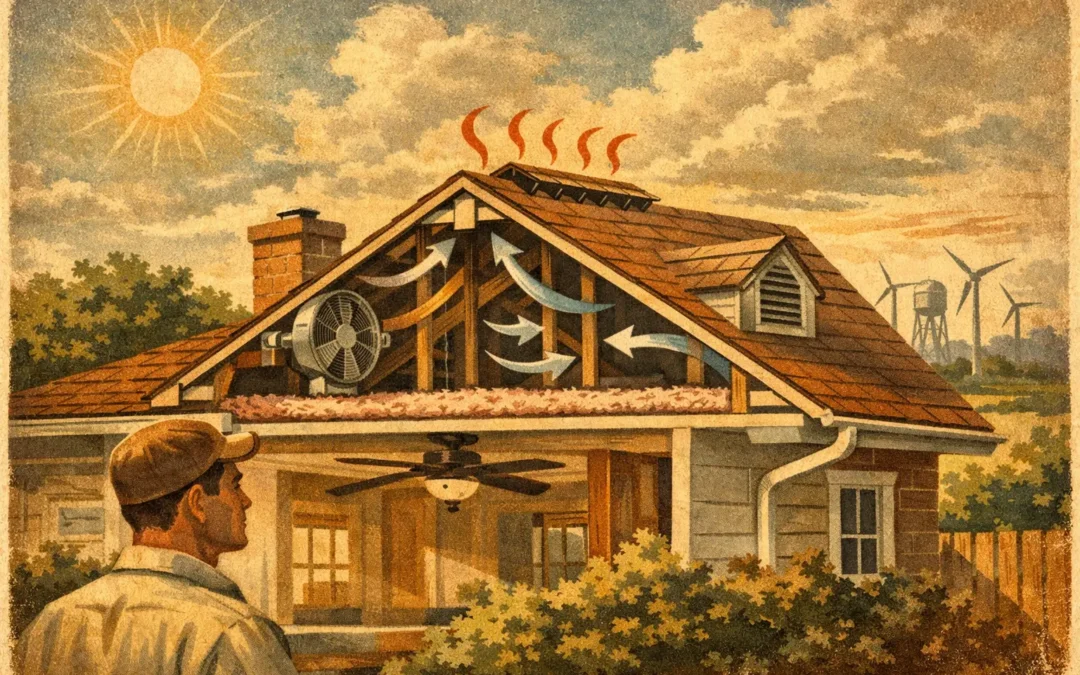
A North Texas attic can become brutally hot by midafternoon. That heat does not stay isolated above the ceiling. It presses on insulation, warms living spaces, and puts extra strain on roofing materials.
The best attic ventilation options move hot, moist air out while allowing fresh air in. The right system is not simply about adding more vents. It needs balanced intake and exhaust, proper placement, and a roof design that supports airflow.
For homeowners in Mansfield, Waxahachie, Midlothian, and nearby communities, ventilation deserves attention during roof replacement. It also matters after hail, wind, or leak repairs. A qualified roofer should inspect the whole attic system, not just the shingles.
Why attic ventilation matters in North Texas
Our long, hot summers create serious heat buildup under the roof deck. Without a clear path for air movement, that trapped heat can shorten shingle life. It can also make upper rooms harder to cool.
Humidity matters, too. Warm indoor air can rise into the attic. When it meets cooler surfaces, it may create condensation. Over time, moisture can affect decking, framing, insulation, and stored belongings.
A healthy attic system helps address several connected concerns:
- Excess heat under the roof deck
- Moisture and condensation in cooler months
- Higher cooling demand during summer
- Premature wear on shingles and underlayment
- Uneven temperatures between floors
Ventilation is only one part of attic performance. Air sealing and adequate insulation matter just as much. An attic fan cannot solve poorly sealed ductwork. It also cannot correct an active roof leak.
How balanced ventilation works
Attic ventilation requires intake and exhaust. Intake vents bring outside air into the attic. Exhaust vents allow hotter air to leave near the roof peak. As warm air rises, cooler air enters lower on the roofline.
Soffit vents usually provide intake. They sit under the eaves, often out of sight. Ridge vents, static roof vents, turbines, and powered fans can provide exhaust.
Balance is the key. Adding exhaust without enough intake can pull air from the home. That may draw conditioned air into the attic. Adding intake without adequate exhaust limits the system’s ability to release heat.
Your roofer should calculate the needed net free ventilation area. This measures the actual open area available for airflow. The right amount depends on attic size, insulation placement, roof shape, and applicable local requirements. Current code requirements and manufacturer installation instructions should guide the final design.
Best attic ventilation options for local homes
There is no single best choice for every house. Roof geometry, existing eaves, attic layout, and neighborhood style all matter. These are the most common options we assess on North Texas homes.
Ridge vents with soffit vents
For many homes, a continuous ridge vent paired with continuous soffit intake is the preferred approach. The system runs along the roof’s highest ridge. It lets heat escape evenly across the attic.
This option is low-profile and blends into many shingle roofs. It has no moving parts. When installed correctly, it offers steady, natural airflow without noise or electrical use.
Ridge ventilation works best when the ridge is long enough. It also needs clear, continuous soffit intake. Some homes have blocked soffits, limited overhangs, or complex rooflines. Those conditions may require another design.
Proper installation is critical. The ridge opening must be correctly cut. The vent must be securely fastened and weatherproofed. A poorly installed ridge vent can become a leak risk during hard Texas rain and wind.
Static roof vents
Static vents are individual metal or molded vents installed near the roof ridge. They use natural heat rise to release attic air. You may hear them called box vents, turtle vents, or louvers.
They can be a practical choice for roofs with short ridges. They also work well on certain hip roofs. Each vent provides a set amount of exhaust capacity. A contractor can determine how many are needed.
Static vents are simple and cost-effective. However, they can look more noticeable than ridge vents. They also require careful placement. Too few vents restrict airflow. Too many, or vents placed too low, can reduce efficiency.
Wind turbines
Wind turbines use moving air to create additional exhaust. They can move a meaningful amount of attic air on breezy days. North Texas storms and regular winds can make them effective in the right setting.
Still, turbines have moving parts. They need proper installation and occasional inspection. A damaged or noisy turbine may need repair or replacement. Their appearance is also not right for every homeowner.
Turbines should never be treated as a shortcut. They still need adequate soffit intake. They also need secure flashing to handle heavy rain and wind exposure.
Powered attic ventilators
Powered attic ventilators use electricity to pull hot air from the attic. Some models use thermostats or humidistats. Solar-powered units are also available.
These fans may help certain difficult attic layouts. Examples include low-slope sections, limited ridge space, or attics with poor natural exhaust paths. They can be useful when designed as part of a complete system.
However, powered fans have trade-offs. They use energy, include mechanical parts, and can require maintenance. More importantly, insufficient intake can cause a fan to draw cooled air from the house. That works against your air conditioning system.
Before recommending a powered fan, a roofing professional should inspect soffits, attic bypasses, insulation, duct connections, and existing vents. More power is not always better airflow.
Gable vents
Gable vents sit high on the exterior wall at each end of an attic. They are common on older homes and may support cross-ventilation. They can be useful where ridge ventilation is not practical.
Gable vents have limitations on complex rooflines. Their airflow may not reach every attic section. They also should not be casually mixed with ridge vents and soffit vents. Competing exhaust locations can disrupt the intended airflow path.
If a home already has gable vents, keep them in the assessment. The best decision may be to retain them, modify them, or close them. That depends on the final ventilation plan.
Avoid mixing vents without a plan
A roof can have several types of exhaust vents. That does not mean it has better ventilation. Mixing ridge vents, box vents, turbines, and gable vents may create short-circuit airflow.
For example, a nearby roof vent may pull air through a ridge vent. Instead of drawing cooler air from soffits, the attic circulates air between exhaust openings. Some areas then receive little benefit.
A clear design is better than a patchwork approach. Use low intake whenever possible. Use exhaust high on the roof. Match the system to the home’s actual needs.
Signs your attic ventilation needs attention
Ventilation trouble is not always obvious from the driveway. Homeowners often notice indirect signs first. Upstairs rooms may feel warmer than expected. Cooling bills may rise during summer. The attic may feel excessively hot even after sunset.
Look for damp insulation, musty odors, rusty nail tips, or dark staining on the roof deck. These signs can point to moisture issues. They do not automatically prove a ventilation problem. A roof leak, plumbing leak, or disconnected duct may also be involved.
After a hailstorm or high-wind event, inspect roof vents as part of the roofing evaluation. Damaged vent covers, cracked flashing, and loose turbine components can allow water into the attic. Addressing small issues early can prevent more expensive repairs later.
Plan ventilation during roof work
Roof replacement is often the best time to correct ventilation. The existing shingles and old flashings are already being removed. That gives the contractor a clear view of roof decking, ridge conditions, and vent locations.
Ask for a written explanation of the proposed system. It should identify intake, exhaust, and any needed repairs to soffits or decking. You should also understand why one option fits your roof better than another.
Accent Roofing has served North Texas homeowners with honesty and integrity since 1980. Our team evaluates ventilation as part of the complete roofing system. We explain what we find in plain language and keep the recommendation focused on your home.
If your attic feels like a furnace, start with an inspection. A balanced ventilation plan can protect the roof above you and make the rooms below it more comfortable.