
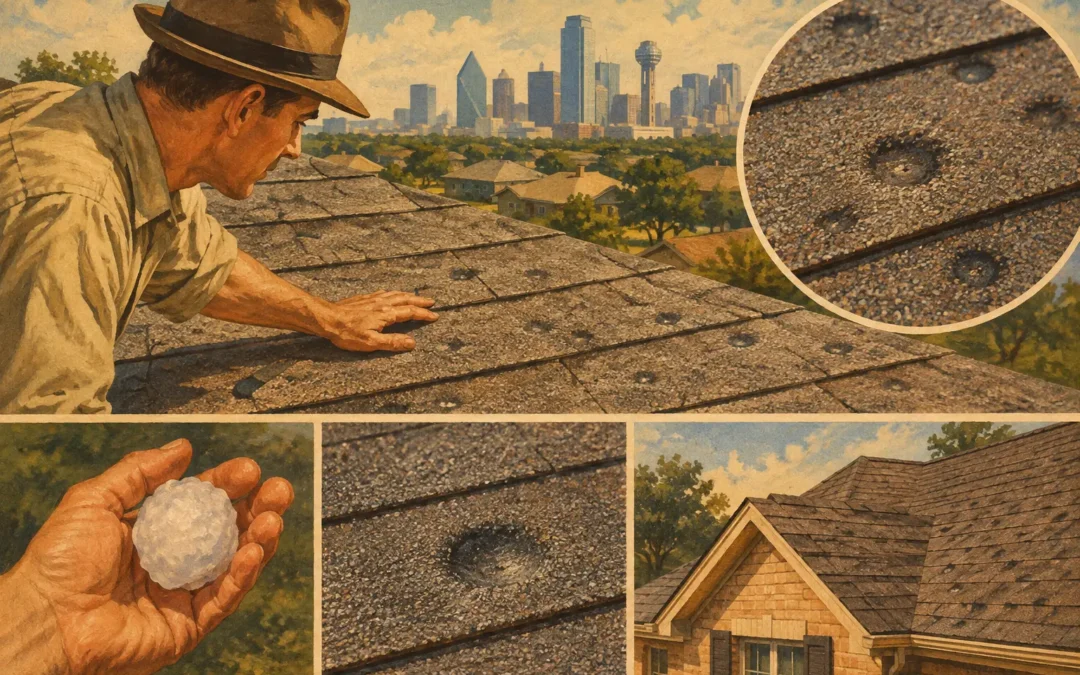
A hailstorm can leave a roof looking normal from the driveway. That is why hail bruising examples matter. The most meaningful damage is often subtle. A shingle may remain in place while its protective surface has been weakened beneath the granules.
For homeowners in Mansfield, Midlothian, Waxahachie, and nearby communities, a careful inspection can replace uncertainty with clear answers. You do not need to climb onto the roof. In fact, after a storm, it is safer to inspect what you can see from the ground and ask an established local roofer to evaluate the rest.
What Hail Bruising Means on a Roof
A hail bruise is a damaged area where hail has struck the shingle. On asphalt shingles, the impact can fracture the asphalt layer or press granules into the mat. The surface may feel soft or slightly spongy when checked by a trained professional.
Not every dark spot is hail damage. Roofs naturally age under North Texas heat, sunlight, and seasonal weather swings. A good inspection separates recent storm impacts from normal wear, manufacturing marks, foot traffic, and old repairs.
Hail size is only one part of the story. Wind speed, roof slope, shingle age, and the direction of the storm also matter. Older shingles can be more vulnerable. Newer shingles may show fewer marks, yet still have qualifying impact damage.
Hail Bruising Examples Homeowners May Notice
The clearest signs are not always on the shingles. Soft metal accessories often record a storm better than a roof surface does. Look from the ground after conditions are safe.
Bruised asphalt shingles
A hail bruise may appear as a dark, round area. It can have a random pattern across several roof slopes. The spot may show missing granules, but a lack of obvious granule loss does not rule out damage.
A trained inspector may gently test the area for a soft feel. They will also look for fractured shingle mats. Those fractures can shorten the roof’s service life by letting moisture and sunlight reach layers that should stay protected.
Granule loss and exposed asphalt
Granules shield asphalt shingles from ultraviolet exposure. Hail can knock them loose in concentrated spots. You may see coarse, sand-like material at downspout exits or along gutters after a storm.
Some granule loss is expected as a roof ages. The difference is pattern and timing. Sudden, scattered loss following a hail event deserves a closer look, especially if the roof was previously in stable condition.
Dented gutters, downspouts, and metal vents
Aluminum gutters can show shallow, circular dents. Metal roof vents, turbine vents, flashing, and pipe-jack covers may have similar marks. These are useful supporting clues because metal dents are easier to spot than shingle bruises.
Still, dented gutters do not automatically mean the roof needs replacement. A complete inspection considers the entire roofing system. It also considers whether shingle impacts are present on multiple slopes.
Damage to skylights, screens, and outdoor equipment
Cracked skylight covers and damaged window screens can point to a strong hail event. Patio furniture, air-conditioning condenser fins, and fence caps may also carry marks. Photographing these items can help document what happened at your home.
Use care around skylights. A cracked cover or seal can create a leak path. Do not cover it with a temporary material unless it can be done safely from inside or at ground level.
What Hail Damage Is Often Confused With
North Texas roofs face intense sun, heavy rain, gusty thunderstorms, and long dry periods. Those conditions create problems that can resemble hail damage. Honest roof evaluations should identify the difference.
Blistering occurs when small raised bubbles form in shingle materials. It is often related to age, heat, or manufacturing factors. Blisters are usually more uniform than hail strikes.
Mechanical marks come from foot traffic, dropped tools, or branches. These marks may be isolated or follow a path across the roof. Hail impacts tend to appear randomly rather than in a straight line.
Wind damage often looks different. It can lift, crease, tear, or displace shingles. Wind and hail can occur in the same storm, so both conditions should be checked.
Normal aging can cause widespread granule loss and brittle shingles. That does not mean a storm caused the condition. It may mean the roof is nearing the end of its useful life. Clear documentation helps homeowners make the right repair or replacement decision.
A Safe Next Step After a Hailstorm
Start with a simple ground-level walk around the home. Take photos of visible dents, fallen limbs, damaged screens, and any debris. Check the attic for active drips or wet insulation during the next rainfall.
Avoid climbing ladders or walking on the roof. Wet shingles are slippery. Heat can also make shingles vulnerable to scuffing. A close inspection is valuable, but it should not create more damage or put anyone at risk.
If you see a ceiling stain or active leak, protect belongings first. Place a container under the drip if needed. Move furniture away from the area. Then arrange a prompt roof inspection.
A dependable contractor should explain what they see in plain language. You should receive photos when possible and an estimate that separates necessary work from optional improvements. If insurance may be involved, your carrier decides coverage based on your policy and its inspection. A roofing contractor can provide damage documentation and help you understand the repair scope.
When a Repair May Be Enough
A localized repair can make sense when damage is limited and matching materials are available. Replacing a few affected shingles, a damaged vent, or a pipe-jack cover may restore protection without replacing the full roof.
The decision depends on the roof’s age and condition. It also depends on how many slopes were affected. A repair may not be the best long-term value if shingles are brittle, widespread impacts are present, or matching shingles cannot be installed cleanly.
This is where a thorough inspection matters. The least expensive option today is not always the least expensive choice over several seasons of Texas storms.
Questions to Ask During a Roof Inspection
A homeowner should never feel rushed after a storm. Ask the inspector to show you the affected areas and explain how they identified them. Ask whether the concern is hail, wind, aging, or more than one condition.
It also helps to ask about ventilation, flashing, and penetrations. These details protect the roof at its most vulnerable points. If replacement is recommended, ask what materials will be used and how the crew will protect landscaping, driveways, and your property during the work.
Be cautious with anyone who arrives uninvited and pressures you to sign immediately. Storm damage creates real urgency when a leak is active. It does not require rushed decisions or unclear promises.
Get Clear Answers From a Local Roofing Partner
Hail bruises can be small, but their consequences may grow over time. Early inspection gives you a factual starting point. It also helps you plan before a minor weakness becomes an interior repair.
Accent Roofing has served North Texas with honesty and integrity since 1980. For homeowners facing a recent storm or an aging roof, a straightforward assessment can bring welcome peace of mind. Let a local team document the condition, explain the options, and help you take the next sensible step.