
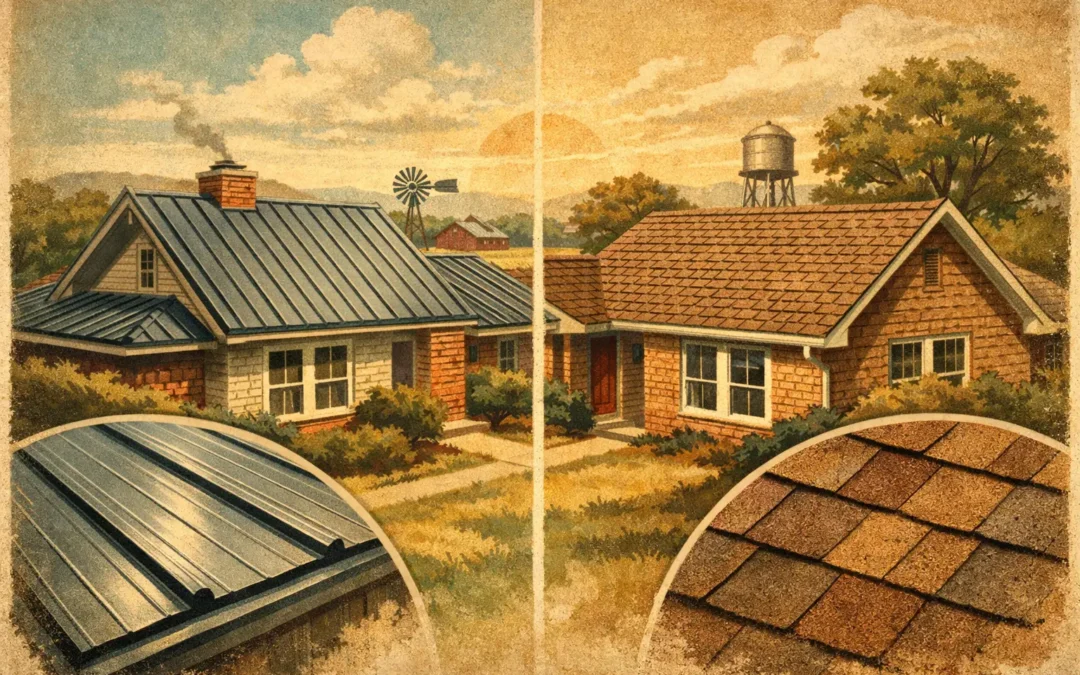
A roof choice feels different after a North Texas hailstorm. Homeowners want more than a good-looking replacement. They need a roof that handles heat, hard rain, wind, and future repairs. In the metal roof vs shingles decision, there is no single right answer. The better choice depends on your home, budget, neighborhood, and long-term plans.
For homes in Mansfield, Midlothian, Waxahachie, and nearby communities, the roof must perform through long, sunny summers and sudden severe weather. A clear comparison helps remove the pressure from a major decision.
Metal Roof vs Shingles: The Core Difference
Asphalt shingles remain the most common residential roofing material in our area. They offer familiar curb appeal, straightforward repairs, and a lower starting cost. Modern architectural shingles also come in many colors and styles.
Metal roofing costs more at installation. In return, it can offer a longer service life and strong weather performance when installed correctly. Standing-seam metal has concealed fasteners. This gives it a clean appearance and reduces exposed points needing maintenance. Other metal panels use visible fasteners and can fit certain homes and budgets.
Neither material can overcome poor installation. Flashing, underlayment, ventilation, decking condition, and drainage matter with every roof. A dependable contractor evaluates the whole system, not just the surface material.
How Each Roof Handles North Texas Weather
North Texas roofs face more than ordinary wear. Summer heat can be relentless. Wind-driven rain can test every flashing detail. Hail can leave damage that is difficult to spot from the ground.
Heat and Sun Exposure
Metal reflects more solar heat than many dark shingle roofs. Certain finishes can help reduce heat absorbed by the roof. That may support a more comfortable attic when the roof system has proper ventilation and insulation.
Shingles absorb more heat, especially in darker colors. Quality architectural shingles are built for heat exposure, but constant sun still affects every roofing material over time. Color selection, attic ventilation, and balanced intake and exhaust airflow matter greatly.
A metal roof is not a substitute for attic insulation. It is also not a cure for every high cooling bill. Your roof deck, ventilation, insulation, windows, and HVAC system work together.
Hail and Wind
Hail is often the deciding factor locally. Asphalt shingles can show bruising, granule loss, cracks, and damaged edges after a storm. Some damage is subtle. It may not be visible without a close inspection.
Metal can resist many types of impact well. Still, metal is not dent-proof. Hail can leave cosmetic dents, especially on thinner panels or softer metals. A dent may not cause a leak, but it can affect appearance. That distinction matters when you value a smooth, uniform roofline.
Wind resistance depends on the full installed system. Shingle fastening patterns, starter shingles, ridge caps, panel clips, trim, and flashing details all matter. A stronger material does not help if it is installed carelessly.
Rain and Leak Protection
Both roof types can protect a home well from rain. The highest-risk areas are often not the broad roof field. They are valleys, wall transitions, chimneys, skylights, pipe penetrations, and roof-to-wall connections.
Standing-seam metal is especially effective at shedding water on properly designed slopes. Shingles also perform very well on most local home designs. Low-slope areas may require a different system than the main shingle roof. A thorough estimate should identify those areas early.
Cost: Upfront Price Versus Ownership Value
Asphalt shingles usually have the lower initial cost. For many homeowners, that makes them the practical choice. This is especially true when a home may be sold within several years or when a roof replacement follows storm damage.
Metal costs more because of the material, specialized labor, trim work, and installation details. It may make sense if you expect to stay in the home long term. It can also appeal to owners who prefer its appearance and lower replacement frequency.
The cheapest estimate is rarely the best value. Ask what is included. A complete roofing proposal should address tear-off, decking repairs if needed, underlayment, flashing, ventilation, cleanup, and permit requirements where applicable. Local building requirements and manufacturer instructions should guide the installation.
Do not compare proposals by the total alone. Compare the scope of work line by line. A lower price can leave out important protection around penetrations or valleys.
Appearance and Neighborhood Fit
Shingles suit many North Texas homes because they complement traditional brick, stone, and siding. Architectural shingles add depth and can resemble higher-end materials from the street. They are a natural fit for many established neighborhoods.
Metal offers a sharper, more modern profile. It works well with contemporary homes, farmhouses, ranch properties, and certain custom designs. Panel color and profile make a major difference. A dark standing-seam roof can look very different from a lighter ribbed panel system.
Before choosing metal, review any neighborhood or homeowners association requirements. Some communities have rules about roof color, material, or visible panel style. Confirm approval needs before materials are ordered.
Repair Needs and Maintenance
Shingle repairs are usually familiar and localized. A qualified roofer can replace damaged shingles and address small flashing issues. Matching older shingles can be difficult because colors fade with age.
Metal repairs require material-specific experience. Panels may need careful removal and replacement. Fasteners, sealants, clips, and trim must be handled correctly. On exposed-fastener systems, periodic fastener checks are part of responsible maintenance.
Both roofs benefit from simple care. Keep gutters moving freely. Remove limbs that scrape the roof. Watch for loose flashing, lifted edges, stains, or attic moisture. Schedule an inspection after significant hail or wind events.
Avoid walking on either roof unless necessary. Foot traffic can damage shingles and may dent or distort metal panels. A professional inspection is safer and more useful.
Which Roof Is Right for Your Home?
Choose architectural shingles when you want a proven local option, broad style choices, easier spot repairs, and a lower starting investment. They are often the sensible answer for standard residential rooflines.
Consider metal when you plan to own the home for many years, prefer its distinct appearance, and are comfortable investing more upfront. It can be a strong fit for homeowners focused on longevity and heat performance.
Your roof shape also affects the decision. Homes with many valleys, dormers, skylights, and penetrations need careful design with either material. Complex metal work can increase cost quickly. A simpler roofline may make metal more attractive.
If a storm has damaged your roof, start with an honest inspection. Documented findings can help you understand the condition of the roof before you speak with your insurance carrier. Your policy, deductible, coverage details, and claim decision remain specific to your situation.
Get a Recommendation Based on Your Roof
A good roofing conversation should not begin with a sales pitch. It should begin with your roof’s age, slope, ventilation, storm history, and condition. It should also consider how long you expect to stay in the home.
Accent Roofing has served North Texas with honesty and integrity since 1980. Our team can explain the practical differences, provide a clear estimate, and keep the worksite clean from tear-off through final inspection. Whether shingles or metal make more sense, the goal is the same: a roof you can trust when the next storm rolls through.