
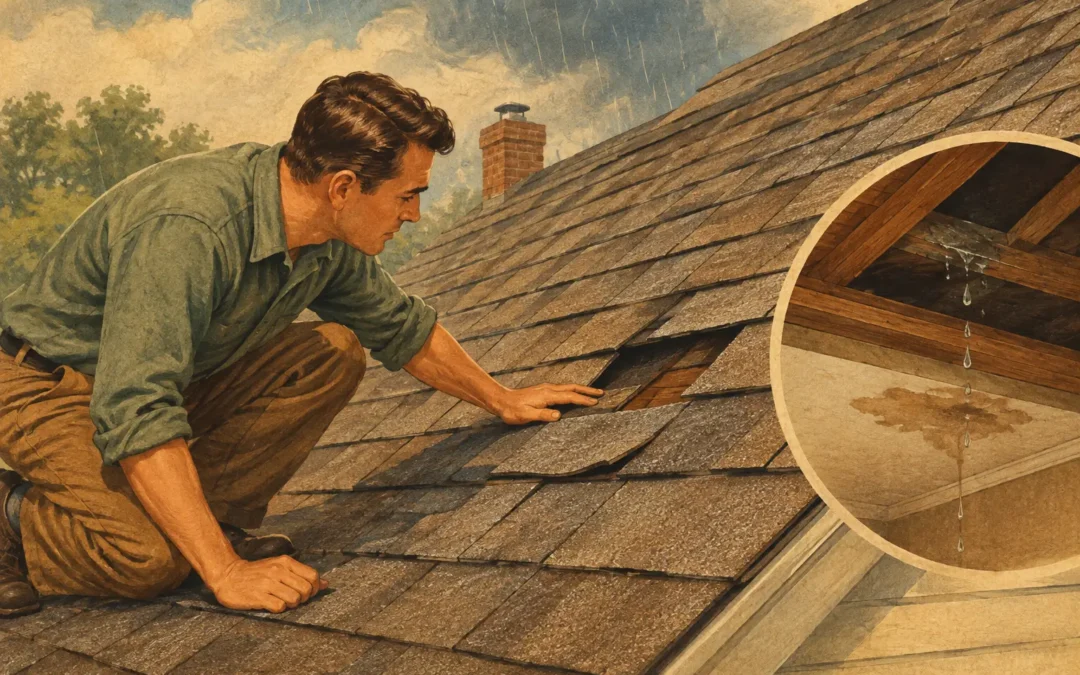
A bare spot on your roof may look small from the driveway. It can still create a direct path for water. Can missing shingles cause leaks? Yes, they can. In North Texas, high winds, hail, driving rain, and intense sun can turn one missing shingle into a much larger repair.
The good news is that a missing shingle does not always mean water has entered your home. Roofing systems have layers beneath the shingles. Those layers provide limited backup protection. They are not designed to remain exposed for long, though. A prompt inspection can help you avoid guessing and reduce the risk of hidden damage.
Why Missing Shingles Can Cause Roof Leaks
Shingles are the first weather barrier on most residential roofs. They overlap in a specific pattern. That pattern sheds rain toward the gutters and away from the roof deck.
When a shingle blows off, rain can reach the underlayment underneath. Wind-driven rain is the greater concern. Strong gusts can force water sideways and upward under nearby shingles. This is common during the severe thunderstorms that move through Mansfield, Midlothian, Waxahachie, and nearby communities.
The exposed area may also let in ultraviolet light. Texas heat can dry, crack, and weaken the underlayment. If the roof deck stays wet, wood can soften or rot. That damage often develops out of sight before a stain appears on the ceiling.
A leak may not show up directly below the missing shingle. Water can travel along the roof deck, rafters, insulation, or wiring before it reaches your ceiling. That is why the source and the visible indoor symptom are often several feet apart.
How Quickly Can Missing Shingles Lead to a Leak?
It depends on the location, roof slope, and weather. One missing shingle on a steep, protected roof plane may not leak during a light rain. The same opening near a valley, vent, chimney, or roof edge can cause trouble much sooner.
A roof valley handles a large volume of runoff. An opening there has more water moving across it. Missing shingles near flashing deserve extra attention as well. Flashing is the metal material that seals transitions around pipes, walls, skylights, and chimneys. Water problems often begin where materials meet.
The condition of the remaining roof matters, too. A newer roof with intact underlayment may have a short window for repair. An aging roof with brittle shingles, exposed nail heads, or past repairs has less margin for error.
After a hailstorm or wind event, do not assume that only the visible missing shingle needs attention. Wind can loosen surrounding shingles without removing them. Hail can bruise or crack the shingle surface. Those issues may shorten the roof’s service life even if there is no immediate leak.
Signs Water May Already Be Getting In
Start inside, but do not rely on indoor signs alone. By the time you see a ceiling stain, moisture may have been present for some time.
Watch for damp spots on ceilings or walls, peeling paint, bubbling drywall, a musty attic odor, or insulation that feels wet. In the attic, look for darkened wood, water trails, or rusty nail tips. Daylight visible through the roof deck requires prompt professional attention.
Outside, ground-level clues can also help. You may notice shingle pieces in the yard, granules collecting near downspouts, lifted shingle edges, or bare sections where darker underlayment is visible. Avoid climbing onto the roof to investigate. A damaged roof surface can be unstable, and walking on hot or brittle shingles can cause more damage.
Take clear photos from the ground if you can do so safely. Note the date of the storm and the areas you observe. This information can be useful when discussing repairs or documenting damage for an insurance claim.
What to Do When Shingles Are Missing
First, protect people and belongings. If water is entering the home, move furniture, electronics, and valuables away from the affected area. Place a container under an active drip. If a ceiling is sagging with water, stay clear of it. A water-filled ceiling can fail suddenly.
Next, arrange a professional roof inspection. A qualified local roofer can identify the missing shingles, check the surrounding materials, and determine whether the roof deck or flashing has been affected. The right repair is based on what is found, not on a quick guess from the ground.
Temporary protection may be appropriate before a repair. This could include a professionally installed tarp over an exposed section. Tarps are not permanent repairs. They can also trap moisture or cause damage when installed improperly. Avoid nailing a tarp to the roof yourself unless emergency conditions leave no safer option.
If storm damage may be involved, review your policy and contact your insurer as needed. A roofing contractor can document visible conditions and explain the repair scope. Your insurer determines coverage under your specific policy. Be cautious of anyone who pressures you to sign immediately or suggests skipping your deductible.
Can One Missing Shingle Be Repaired?
Sometimes, yes. A focused repair can be a practical solution when the roof is otherwise in good condition. The replacement shingle should match the existing roof as closely as possible in type, color, and profile. Exact color matching is not always possible, especially on older roofs exposed to years of Texas sun.
A repair may not be the best long-term answer when several shingles are missing, large areas are lifted, or the roof has widespread hail damage. Repeated patching can become more expensive over time. It may also leave a roof with uneven performance across different sections.
An honest inspection should distinguish between a repairable issue and a roof nearing replacement. You deserve clear photos, a straightforward explanation, and a written estimate that identifies the work proposed. There is no benefit in replacing a roof prematurely. There is also no benefit in repeatedly repairing a system that can no longer protect the home reliably.
Common Causes of Missing Shingles in North Texas
North Texas roofs face a demanding mix of weather. Spring and early summer storms can bring powerful wind gusts, hail, and heavy rainfall. Sudden temperature changes add stress throughout the year. Summer heat then accelerates aging on exposed shingle surfaces.
Missing shingles may result from storm winds, but installation quality also matters. Shingles need proper fastening, sealing, and alignment. If nails are placed too high, too low, or driven through the shingle, wind resistance can suffer. Poor attic ventilation can also raise roof temperatures and contribute to premature wear.
Age is another factor. As asphalt shingles become brittle, they are more likely to crack or break loose during a storm. A roof that handled last year’s weather may not perform the same way this season.
Why a Timely Inspection Protects More Than the Roof
Roof leaks can affect more than shingles and decking. Water can damage insulation, drywall, trim, flooring, and personal belongings. Moisture in enclosed spaces can also create unpleasant odors and encourage mold growth.
Early repair is usually simpler because it addresses a small opening before water spreads. It also gives you a better picture of your roof’s remaining condition. That helps you plan for maintenance or replacement without the pressure of an emergency.
For property managers, a quick inspection after severe weather can help prevent a small tenant complaint from becoming a larger interior repair. For homeowners, it can bring peace of mind before the next round of storms arrives.
Accent Roofing has served North Texas families with honesty and integrity since 1980. A detailed inspection can identify missing shingles, storm damage, flashing concerns, and signs of moisture before they become harder to manage.
If you suspect shingles are missing, do not wait for a ceiling stain to confirm the problem. Schedule a professional evaluation, keep a close eye on the affected area, and give your home the protection it needs before the next storm rolls through.