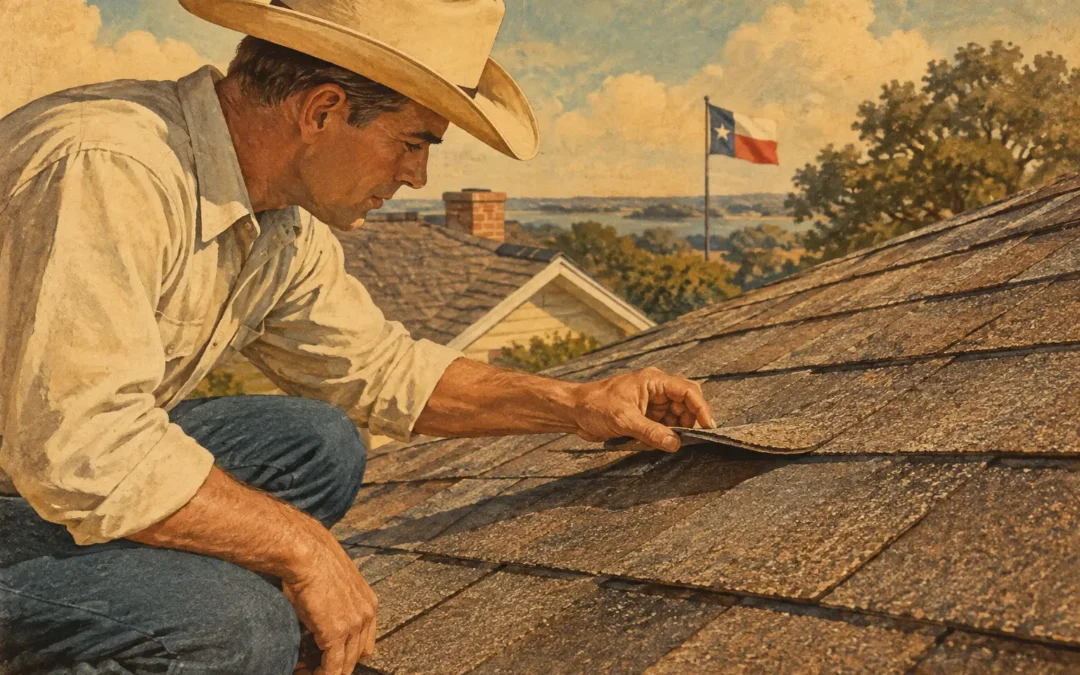
A shingle corner flapping after a storm may look minor. On a North Texas roof, it can become a leak path fast. Homeowners often ask what causes shingles to lift because the answer helps them decide whether they need a repair now or a larger plan for an aging roof.
Lifted shingles are not always a sign of poor maintenance. They can result from years of intense sun, sudden wind events, hail impacts, or hidden installation issues. The key is finding the cause before wind catches the loose edge again.
What Causes Shingles to Lift?
Shingles lift when their bond to the roof deck weakens or breaks. That bond comes from roofing nails, the adhesive strip beneath each shingle, and correct overlap between courses. If one of those elements fails, wind can get underneath the shingle.
Once air reaches that underside, it creates upward pressure. The shingle may crease, bend, crack, or tear loose. A single raised edge can also expose nails and underlayment to rain.
In Mansfield, Waxahachie, Midlothian, and nearby communities, several causes appear repeatedly. They often overlap on the same roof.
High winds and thunderstorm outflow
Strong storm winds are a common cause of lifted shingles. Wind does not need to remove whole sections to cause damage. It may loosen tabs, break adhesive seals, or pull shingles over nail heads.
The most vulnerable areas are usually ridge lines, roof edges, valleys, and sections facing prevailing storm winds. Older shingles are especially prone to lifting. Their flexibility decreases with age.
Wind damage can be hard to see from the ground. A roof can appear intact while several shingles have unsealed edges. That is why a prompt inspection after a severe storm is sensible.
North Texas heat and sun exposure
Long, hot Texas summers place steady stress on asphalt shingles. Roof surfaces can become much hotter than the outdoor air. Heat causes roofing materials to expand and contract each day.
Over time, this movement can weaken adhesive strips. It can also dry out the shingle itself. Brittle shingles are more likely to crack or lift when a storm arrives.
Sun exposure is usually worst on south- and west-facing roof slopes. If one side of your roof looks more worn, heat may be part of the reason. Attic ventilation also matters. Excess heat trapped in the attic can add strain from below.
Hail damage that weakens the shingle surface
Hail does not always punch holes through a roof. More often, it knocks away protective granules or bruises the shingle mat beneath them. That damage reduces the shingle’s ability to handle future weather.
A hail-hit shingle may later crack or lift in ordinary wind. The storm that caused the visible lifting may not be the storm that started the problem. This is one reason a professional inspection should consider the roof’s overall condition, not just the loose shingle.
Failed or unsealed adhesive strips
Most modern shingles use a factory-applied adhesive strip. Warm weather helps this strip seal the shingle course above it. If sealing never occurs properly, wind can work under the tabs.
This issue may result from installation during cold weather, dust on the bonding area, or shingles that were not properly hand-sealed when conditions required it. It can also happen when shingles are installed over a surface that is not clean or flat.
Not every unsealed shingle means the entire roof is defective. But widespread unsealing deserves a closer look. A qualified roofer can tell whether the issue is isolated or affects the system.
Improper nailing or installation errors
Nails must be placed in the correct zone and driven to the correct depth. Nails set too high may fail to secure the shingle properly. Nails driven too low can cut through the shingle surface.
Overdriven nails, crooked nails, and missing nails reduce wind resistance. So can using too few fasteners. These mistakes may stay hidden for years, until a storm exposes them.
Poor alignment also creates problems. Shingles need the right overlap to shed water and resist wind. Repairs should match the surrounding pattern and use compatible materials.
Aging shingles and normal material wear
Every roof reaches a point where repairs become less dependable. As shingles age, they lose granules, dry out, curl, and become less able to reseal after wind lifts them.
An older roof may have several repairs in different areas. It may also have widespread granule loss and exposed nail heads. In that situation, replacing one or two lifted shingles may stop an immediate leak but not solve the larger concern.
A roof inspection should give you a clear answer. Sometimes a focused repair is the responsible choice. Other times, replacement is the better long-term value.
Other Conditions That Can Make Shingles Lift
Wind, heat, and age are common causes. Yet the roof structure and ventilation system also play a role.
Deck movement and moisture problems
Shingles need a solid, dry roof deck beneath them. If decking has water damage, it can soften or warp. That movement may loosen nails and create uneven areas where shingles no longer lie flat.
Leaks around pipes, chimneys, skylights, or wall transitions can cause localized deck damage. From the outside, you may see a dip, a raised line, or shingle edges that will not settle back down.
This should not be ignored. The visible shingle issue may be smaller than the moisture problem underneath.
Poor attic ventilation
Ventilation does not prevent every roof issue. Still, it helps control heat and moisture in the attic. When attic air becomes excessively hot or humid, roofing materials can face more stress.
Signs of ventilation concerns may include uneven shingle aging, excessive attic heat, or moisture staining near roof framing. A roofing professional should assess intake and exhaust together. Adding a single vent without a plan may not correct the problem.
Layered roofing or uneven surfaces
A new roof installed over old shingles can hide uneven surfaces. Local building requirements and the roof’s condition affect whether reroofing is appropriate. In many cases, removing the old roof provides a better view of decking and flashing conditions.
The lower layer can also make it harder for new shingles to lie flat and seal consistently. This is not a problem on every layered roof. It is one factor a contractor should evaluate honestly.
What Homeowners Should Look For Safely
Do not climb onto a roof to inspect lifted shingles. Granules, steep slopes, and loose material create real fall risks. Start from the ground after the weather has cleared.
Look for shingle tabs that appear raised, crooked, missing, or bent. Check for loose pieces in the yard, exposed nail heads, and dark patches where granules may be missing. Indoors, inspect ceilings and attic spaces for fresh water stains or damp insulation.
Take clear photos from the ground if you can do so safely. Note the date of the storm and any changes you see. This information helps during a roofing inspection and can be useful if you later speak with your insurance carrier.
Avoid pressing shingles back into place or using roofing cement as a quick fix. A brittle shingle can crack under pressure. Temporary patching can also conceal the original condition.
When a Lifted Shingle Needs Prompt Repair
Schedule an inspection soon if you see more than one lifted shingle. Act quickly if shingles are missing, creased, torn, or loose near a roof edge. You should also call if water stains appear indoors.
A loose shingle near flashing deserves attention. Areas around vents, chimneys, valleys, and wall transitions manage large amounts of water. Small failures there can create leaks that travel before becoming visible inside.
After hail or high winds, a professional can document the roof’s condition and explain the next practical step. If storm damage appears to be involved, your insurer may require its own review. A local contractor can provide repair findings and help you understand the process without making promises about coverage or payment.
Repair or Replacement: The Right Answer Depends
A newer roof with a few wind-lifted shingles may be a good repair candidate. Matching shingles, resecuring affected areas, and checking nearby flashing can restore protection when the surrounding roof remains sound.
Replacement becomes worth discussing when lifting is widespread or shingles are brittle throughout. It may also make sense when the roof has repeated leaks, extensive hail wear, or aging materials near the end of their service life.
The lowest immediate price is not always the lowest long-term cost. A repair should address the actual cause, not merely flatten the symptom. Ask for clear photos, a plain-language explanation, and an estimate that separates necessary work from optional improvements.
Accent Roofing has served North Texas homeowners with honesty and integrity since 1980. A careful inspection can show whether your roof needs a targeted repair or a dependable replacement plan. The best next step is a clear answer before the next round of heat, wind, or rain tests the loose edge again.