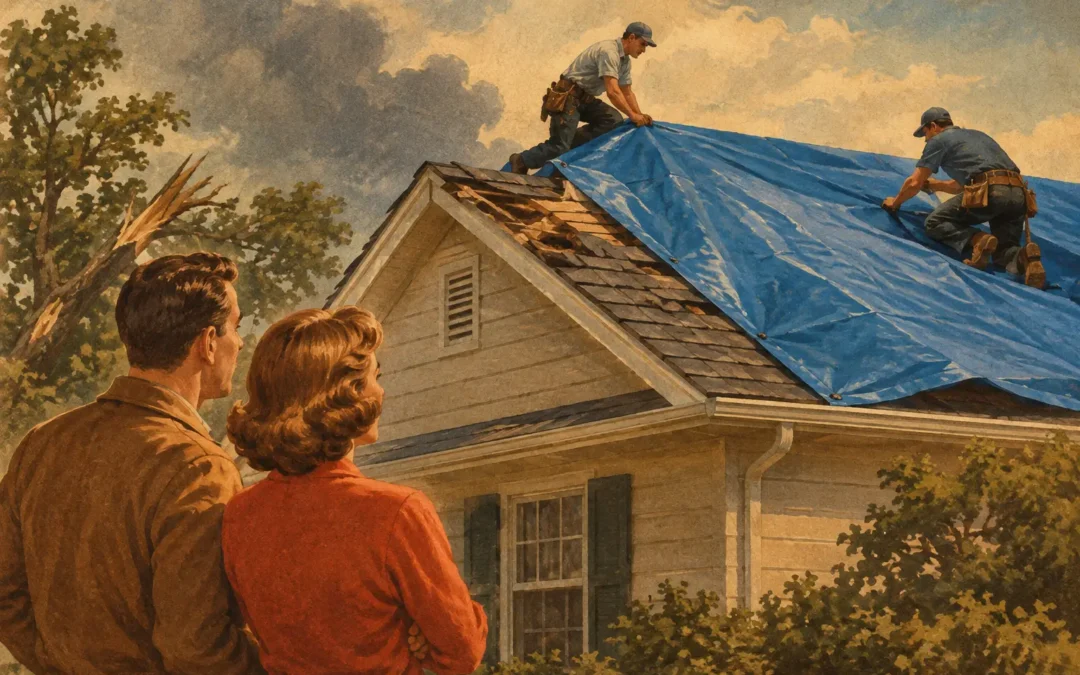
A roof tarp can stop a bad storm day from becoming a major interior repair. But will insurance cover roof tarping? Often, it may cover reasonable emergency protection after sudden covered damage. The answer still depends on your policy, the cause of damage, and the records you provide.
For North Texas homeowners, this question often follows hard hail, straight-line winds, or wind-driven rain. A missing shingle, lifted flashing, or punctured roof can let water enter quickly. Acting promptly helps protect your home. It also shows you took reasonable steps to prevent further damage.
Will Insurance Cover Roof Tarping?
Many homeowners policies may include emergency tarping when a covered event damages the roof. Hail and wind are common examples. The tarp is meant to limit additional water intrusion until permanent repairs can happen.
This is usually called mitigation. It is not the same as a full roof replacement approval. Your insurer will review the original storm damage, policy terms, deductible, exclusions, and the tarp expense itself.
A tarp is more likely to be considered when it addresses a clear, recent opening. Examples include exposed decking, missing shingles, displaced ridge materials, or a damaged roof penetration. Water entering through that opening can damage ceilings, insulation, walls, flooring, and belongings.
Coverage is less certain when the problem stems from age, wear, poor maintenance, or an existing leak. Insurance commonly covers sudden accidental damage, not gradual deterioration. An old roof can still be damaged by a storm. The adjuster must separate storm effects from pre-existing conditions.
Do not wait for an insurance decision before stopping active water entry. Read your policy if possible. Then contact your insurer and arrange practical emergency protection. Keep the work limited to what is necessary to secure the roof.
Why Emergency Tarping Matters After Texas Storms
Storm damage in Mansfield, Waxahachie, Midlothian, and nearby communities can be deceptive. Hail may bruise shingles without creating an immediate leak. Strong winds can break seals or lift shingles at the edges. Heavy rain may then find the weak point.
A proper tarp provides a temporary barrier. It buys time for an inspection, an insurance review, and lasting repairs. It should not become a long-term roofing solution.
Tarping also protects the claim from avoidable complications. If rain continues entering through a known opening, an insurer may ask why further damage was not prevented. That does not mean every later repair will be denied. It does mean clear documentation matters.
Safety comes first. Never climb onto a wet, steep, or visibly damaged roof. Keep children and pets away from fallen materials. If a tree limb, electrical line, or structural damage is involved, contact the appropriate emergency professionals before arranging roof work.
What to Do Before the Tarp Goes On
Take photos and short videos from the ground when it is safe. Capture missing shingles, debris, visible openings, interior stains, and any active dripping. Include wide shots of the home and close shots of damaged areas.
Then document the date and approximate time of the storm. Note what you observed, such as hail, strong wind, or a branch striking the roof. Your notes do not prove coverage. They do help create a clear timeline.
Before authorizing emergency work, ask the contractor for a written scope and invoice. The paperwork should identify the location of the tarp, materials used, labor performed, and date of service. Save proof of payment.
These records can help your insurer understand why the work was needed. Keep copies of every estimate, invoice, photo, and conversation related to the loss.
A Simple Tarping Checklist
When a roof is actively leaking, focus on a few practical steps:
- Photograph the damage before work begins, if conditions allow.
- Notify your insurance carrier and begin a claim when appropriate.
- Use a qualified local roofer for safe, secure installation.
- Keep all invoices, receipts, photos, and claim correspondence.
- Remove valuables from wet areas and catch water safely indoors.
Inside the home, move furniture, electronics, and rugs away from the leak. Place containers under drips where safe. If ceilings sag, avoid the area. Water can collect above the drywall and create a collapse hazard.
What an Insurance Company May Review
Insurance companies commonly evaluate the cause of loss first. A tarp may be reasonable, but its cost may not be reimbursed if the underlying damage is excluded. This is why a careful inspection matters.
The adjuster may also review whether the tarp price was reasonable for the work performed. Emergency work can cost more than scheduled work. It may involve after-hours response, steep access, or difficult weather conditions. Even so, ask for transparent pricing before work starts whenever circumstances permit.
Your deductible also matters. A covered tarping charge may apply toward it. In some cases, the cost may be below the deductible. That does not make tarping unnecessary. Preventing interior damage is often the right move regardless of reimbursement.
Policy language varies. Some policies have separate deductibles for wind or hail. Others have limits or specific requirements for temporary repairs. Your carrier can explain your policy’s terms. A reputable contractor can provide photos, observations, and a detailed work scope to support the process.
Avoid Common Problems With Emergency Roof Work
After a storm, homeowners may get unexpected knocks at the door. Some contractors promise quick approvals or claim they can eliminate your deductible. Be cautious. Texas law prohibits contractors from paying, waiving, or rebating an insurance deductible.
Choose a contractor with a local track record and a physical office. Ask who will install the tarp, how it will be anchored, and whether the work includes an inspection of the damaged area. Loose tarp edges can collect water or create wind hazards.
A tarp should be secured without causing unnecessary additional damage. The roof type and damage location affect the method. On many homes, the installer must carefully protect the exposed area while keeping water from flowing beneath the covering.
Do not accept vague paperwork. A clear estimate protects you and sets expectations. It should separate emergency services from recommended permanent repairs. That makes the insurance discussion easier to follow.
Tarping Is Temporary. Inspection Is the Next Step.
Once the roof is protected, schedule a professional inspection. The goal is to identify every affected area, not just the visible leak. Hail impacts, wind damage, damaged vents, compromised flashing, and loose shingles can all affect the repair plan.
A sound inspection should include the roof surface, penetrations, flashing, gutters, and accessible attic areas. The contractor should explain findings in plain language. You should understand what needs immediate attention and what can be monitored.
For aging roofs, a storm can reveal broader problems. Sometimes a focused repair is appropriate. Other times, widespread damage or worn materials make replacement the more durable choice. The right recommendation should reflect the roof’s condition, not a one-size-fits-all sales pitch.
Accent Roofing has served North Texas homeowners since 1980. Our team can assess storm damage, install practical temporary protection when needed, and provide clear documentation for your claim process. We do not interpret your policy or promise claim outcomes. We help you understand the roof work required.
If your roof has an active leak, protect the home first. Then choose an experienced local contractor who will explain the next step clearly and stand behind the work.