
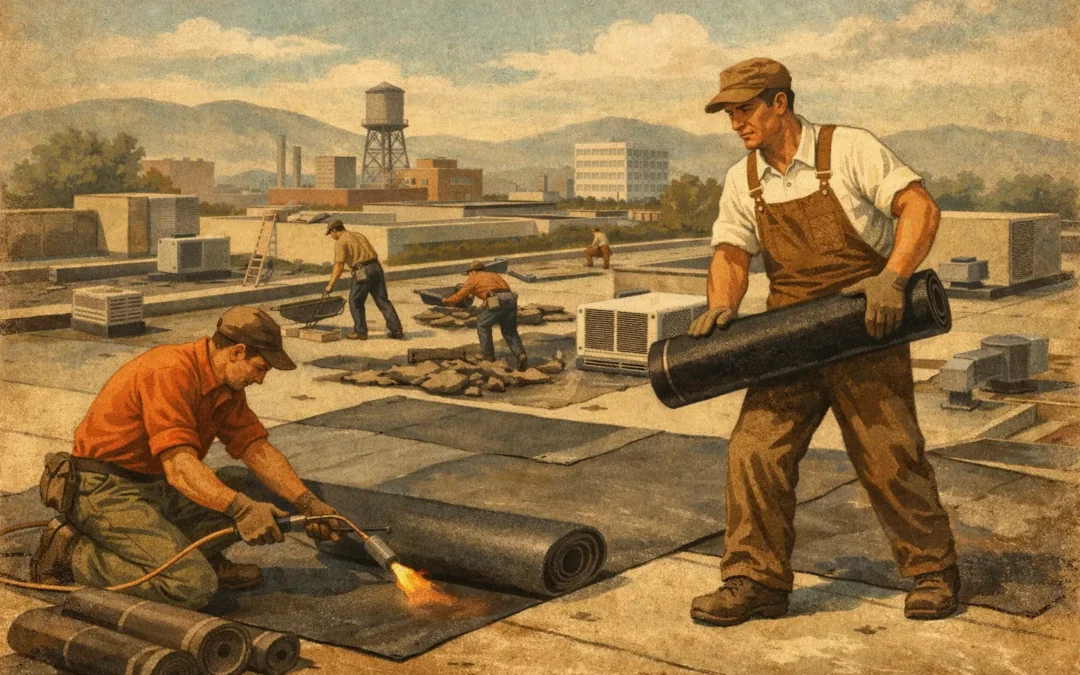
A commercial roof usually starts asking for attention long before it fails. You may notice recurring leaks after a storm, ponding water that never seems to dry, rising repair bills, or tenants and staff pointing out ceiling stains in the same trouble spots. That is when commercial roof replacement services move from a future expense to a real business decision that affects operations, safety, and long-term property value.
For property owners and managers, the hard part is not knowing that a roof is aging. The hard part is deciding whether to keep patching it, restore part of it, or replace the full system. A good contractor should not push the biggest job by default. They should inspect the roof, explain what is happening, and give you a straight answer about what buys you time and what only delays a larger problem.
When commercial roof replacement services make sense
Not every damaged roof needs to be torn off right away. In some cases, repairs are still the smart move, especially if the damage is limited to one area and the rest of the system is in sound condition. But there comes a point when repairs stop being cost-effective.
Age is one of the clearest signs. If a commercial roof is near the end of its expected service life and leaks are becoming more frequent, replacement often makes more financial sense than ongoing patchwork. The same is true when moisture has made its way into insulation or the roof deck. At that point, a surface repair may stop a leak for now, but it does not fix what is happening underneath.
Storm damage can also change the equation quickly. In North Texas, hail and high wind can shorten the life of a commercial roofing system fast, even when damage is not obvious from the ground. Membrane punctures, lifted seams, flashing failures, and hidden moisture intrusion can all lead to bigger interior issues if they are not addressed early.
Then there is the practical side. If your building staff is calling for roof repairs every few months, or if tenants are frustrated by recurring leaks, disruption starts costing more than the roofing work itself. Replacement is a larger project up front, but it can bring predictability back to the property.
What commercial roof replacement services typically include
A proper replacement is more than installing new material on top of an old problem. The process should begin with a detailed inspection and a clear scope of work. That includes identifying where the roof has failed, checking for trapped moisture, evaluating drainage, and determining whether the deck and insulation are still sound.
From there, the contractor should explain whether a full tear-off is needed or whether a code-compliant recover system is even an option. It depends on the existing roof layers, local code requirements, and the overall condition of the assembly. Sometimes a recover can save money. Other times it only hides damage and shortens the life of the new system.
Most commercial roof replacement services also include attention to the details that commonly fail first – flashing around penetrations, edge metal, drains, scuppers, curbs, and transitions. These areas matter just as much as the field membrane. A roof can look fine from a distance and still leak repeatedly because the perimeter or flashing work was not handled correctly.
The best contractors also plan around your business, not just the roof. That means discussing access points, staging areas, work hours, noise, debris control, and safety. If your building is occupied, the crew should have a plan to protect entrances, equipment, landscaping, and people moving in and out during the job.
Choosing the right roofing system
There is no single best commercial roof for every building. The right choice depends on your structure, budget, drainage, energy goals, and how long you plan to hold the property.
TPO and PVC membranes are common on low-slope commercial roofs because they offer strong weather resistance and can improve energy efficiency with reflective surfaces. Modified bitumen and built-up roofing still have their place, especially where durability and multi-layer protection are priorities. Metal roofing can be a strong option for certain commercial properties, particularly when longevity and lower maintenance are part of the plan.
The trade-offs matter. A lower initial price may look good on paper, but if the system is not well suited to the building, you may spend more over time on repairs, drainage corrections, or premature replacement. On the other hand, the highest-priced option is not automatically the best fit either. Good advice should be tied to your property, not to what is easiest for the contractor to sell.
How to evaluate a contractor for commercial roof replacement services
Commercial work requires planning, communication, and accountability. That matters even more when the project affects tenants, employees, inventory, or day-to-day operations.
Start with experience, but do not stop there. Ask how the contractor handles occupied buildings, weather delays, cleanup, and coordination with property managers or tenants. Ask who will supervise the project and how problems are communicated if unexpected damage is uncovered after tear-off.
A trustworthy contractor should also be honest about scope changes. Commercial roofs sometimes reveal hidden issues once work begins. Wet insulation, damaged decking, or poorly installed prior repairs are not rare. What matters is whether the contractor explains those findings clearly, documents them, and gives you options rather than using surprise costs as pressure.
Local accountability matters too. A contractor with deep roots in the area has more at stake than a crew passing through after a storm. Family-owned roofing companies often win trust this way because the people giving the estimate are tied to the reputation of the work long after the job is done. For many owners, that peace of mind matters as much as the materials.
Budget, insurance, and the real cost of waiting
Commercial roof replacement is a major investment, and every owner wants to know whether they can safely wait another year. Sometimes the answer is yes. Sometimes waiting turns a manageable project into interior damage, disrupted business, ruined insulation, and a much larger bill.
The real cost is not just the roof. It is water damage to ceilings, walls, electrical systems, inventory, tenant spaces, and equipment. It is also the time your team spends chasing leaks, documenting issues, and dealing with frustrated occupants.
If storm damage is part of the picture, insurance may help, but only if the damage is documented and the claim is handled properly. This is one area where experienced roofing contractors can make the process less stressful. They can provide inspection findings, photos, and a clear scope that helps support the claim. That does not mean every roof loss will be approved, but it does mean you are not trying to sort through a technical process on your own.
What a smooth project looks like
A smooth commercial roof replacement job is not one without any surprises. It is one where the contractor communicates early, keeps the site orderly, and follows through on what was promised.
You should know the schedule, who to contact, and what to expect each step of the way. Materials should arrive in an organized way. The site should stay as clean and safe as possible. If weather causes delays, you should hear about it. If hidden damage is found, you should get a clear explanation before the work moves forward.
That kind of communication is not a bonus. It is part of the service. Property owners do not just hire a roofing company to install materials. They hire them to reduce stress, protect the building, and keep a complicated project from turning into a drawn-out headache.
For business owners and property managers in places like Mansfield, Midlothian, and across the southern DFW area, that local, hands-on approach still matters. It is one reason established companies continue to earn repeat work over time. People remember who answered the phone, kept the job clean, and stood behind the roof after the final invoice was paid.
If your commercial roof keeps demanding repairs, now is the right time to get clear answers. A good inspection can tell you whether you need a few targeted fixes or a full replacement, and that clarity is worth a lot when the next storm rolls in.