
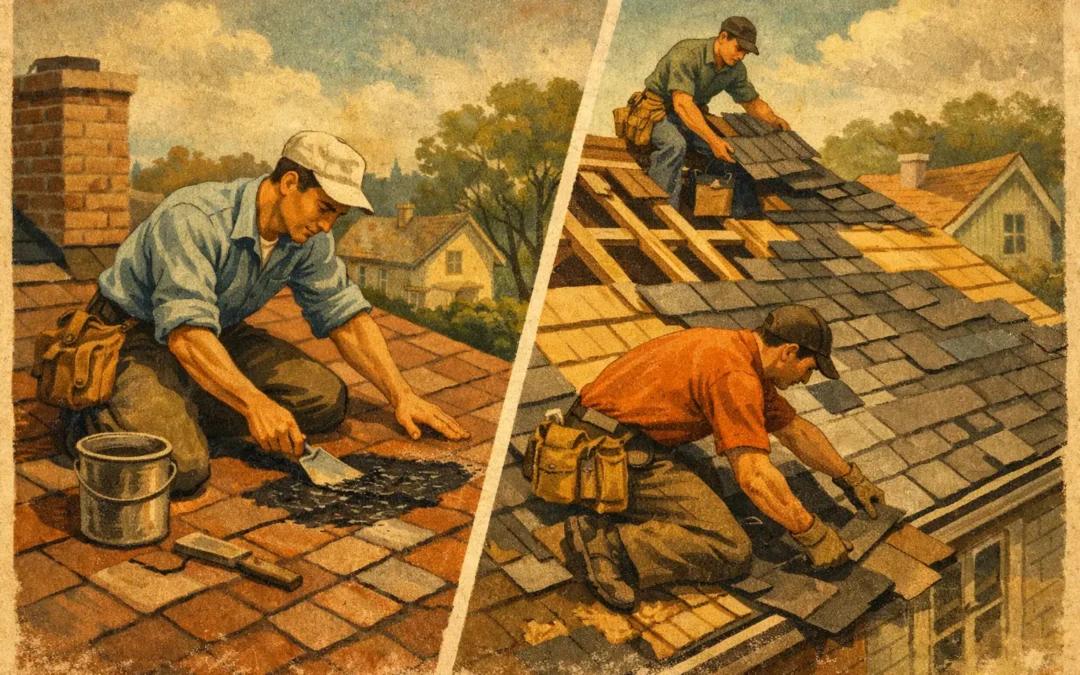
A water spot appears after a hard Mansfield thunderstorm. A few shingles are missing. The question feels simple, but the answer rarely is. Roof patching versus replacement depends on what happened beneath the visible damage, how old the roof is, and whether the system can still protect your home through another North Texas storm season.
A patch can be the honest answer. So can a full replacement. The right choice should never be driven by pressure or fear. It should come from a careful inspection, clear photos, and a practical discussion about your roof’s remaining life.
Roof Patching Versus Replacement Starts With the Cause
A roof leak does not always mean the whole roof has failed. Small, isolated problems can often be repaired effectively. Common repair needs include lifted flashing, a damaged pipe boot, a few missing shingles, or a localized puncture from a fallen branch.
These problems have a clear source. When the surrounding roof remains sound, a professional repair can restore protection without asking you to replace material that still has useful life.
Storm damage can be different. North Texas hail often leaves damage that is spread across many roof slopes. High winds can loosen shingles beyond the spot where they first become visible. A roof may look mostly intact from the ground while having widespread bruising, granule loss, or compromised seals.
That is why a contractor should inspect more than the leak. The condition of shingles, flashing, vents, valleys, decking, gutters, and roof penetrations all matter. A careful evaluation identifies whether you have one repairable issue or a roof system nearing the end of its service life.
When a Roof Patch Makes Sense
A targeted repair is usually a good option when the roof is otherwise in solid condition. The damage should be limited, and replacement shingles should reasonably match the existing roof. The repaired area must also tie correctly into the surrounding materials.
For example, a newer roof may need a repair after a branch damages one slope. A pipe boot can crack from sun exposure. Flashing around a chimney may loosen over time. These are specific defects, not necessarily signs of a failing roof.
A quality patch should address the source of the problem. It should not simply cover a symptom with sealant. Roofing cement may help in limited situations, but it is not a long-term answer for damaged shingles, failed flashing, or deteriorated underlayment.
Repair also makes sense when you need time to plan. If an aging roof has a small, isolated leak, a sound repair can protect the home while you budget for a future replacement. The key is being realistic about that timeline.
The Limits of a Repair
Even a well-done repair has limits. Shingle colors fade under the Texas sun. A new section may not blend perfectly with an older roof. More importantly, a patch cannot reverse widespread aging.
If multiple areas are leaking, shingles are brittle, or granules are collecting in gutters, repairs can become a repeating expense. Fixing one area may reveal another weakness after the next hailstorm or heavy rain.
A contractor should explain this clearly. You deserve to know whether a repair is likely to provide years of service or simply buy a short amount of time.
Signs Replacement May Be the Better Investment
Full replacement becomes more practical when the roof has broad damage or limited remaining life. This is especially common on roofs that have endured years of intense summer heat, hail, wind, and rapid temperature changes.
Consider replacement when several of these conditions are present:
- Shingles are curling, cracking, balding, or losing granules across several areas.
- Leaks appear in more than one location.
- Hail or wind damage affects multiple slopes.
- Repairs have become frequent over recent years.
- The roof is nearing or past its expected service life.
- Decking, ventilation, or flashing issues require broader corrections.
Replacement gives the entire roofing system a fresh start. That includes the shingles, underlayment, flashing details, ventilation components, and other materials that work together to shed water.
It also allows a contractor to inspect the roof deck once old materials are removed. Hidden soft spots, moisture damage, and previous installation issues are easier to identify at that stage. If repairs are needed, they can be handled before the new roofing system is installed.
For many long-term homeowners, this is the value of replacement. It is not just new shingles. It is a chance to correct system-wide concerns and reduce the uncertainty of repeated repairs.
North Texas Weather Changes the Decision
Homes in Mansfield, Arlington, Midlothian, Waxahachie, and nearby communities face weather that can be hard on roofing materials. Hail can strike quickly in spring. Strong winds can lift shingles and expose vulnerable edges. Summer heat speeds up aging, especially on roofs with poor ventilation.
Heavy rain also tests every weak point. Valleys, pipe penetrations, skylights, chimneys, and wall transitions need proper flashing. A small issue at one of these areas can send water into an attic or wall cavity before it becomes visible indoors.
Local building requirements matter as well. A replacement project may involve current code requirements for materials, ventilation, decking repairs, or other components. The details depend on the home and local jurisdiction. A qualified local contractor should explain what applies before work begins.
Storm timing matters, too. A repair may be appropriate before a forecasted rain event when damage is contained. But after a significant hailstorm, it is wise to have the entire roof assessed before choosing a narrow fix. Visible damage is not always the complete story.
Think Beyond the Immediate Price
A patch has a lower upfront cost. That can be the right financial decision when the issue is isolated. But the least expensive repair is not always the lowest-cost path over several years.
Imagine an older roof with three separate leaks. Repairing each one may seem manageable at first. Yet those repairs do not address worn shingles or aging underlayment across the rest of the home. If another storm causes new damage soon afterward, the money spent on repeated repairs can add up.
Replacement costs more upfront because it is a larger project. It may also offer better value when your roof is close to the end of its usable life. A clear estimate should separate necessary work from optional improvements. It should also explain what materials and installation steps are included.
For storm-related damage, documentation can help you make an informed decision. Photos, inspection notes, and repair findings give you useful information when speaking with your insurance carrier. Your policy, coverage, deductible, and claim outcome remain specific to your situation. A reputable contractor can help document observed damage and explain the roofing scope without making promises about claim results.
Questions to Ask Before You Decide
Ask your contractor to show you the damage. Clear photos and a plain-language explanation make the decision easier. You should understand whether the issue is isolated, whether moisture has reached the decking, and how much useful life remains in the surrounding roof.
Also ask what a repair is expected to accomplish. Will it resolve a single failed component? Is there a color-match concern? Could nearby materials fail soon? These are reasonable questions, and direct answers matter.
For replacement, ask how the property will be protected during construction. A dependable crew should discuss cleanup, landscaping precautions, debris removal, daily communication, and final inspection. A roofing project affects your home, driveway, and family routine. Clean work practices are part of doing the job right.
Choose a Contractor Who Will Give You Both Options
Be cautious when someone recommends replacement without explaining repair options. Be equally cautious when someone offers a quick patch without evaluating the rest of the roof. Both choices have their place.
Accent Roofing has served North Texas with honesty and integrity since 1980. As a family-owned contractor, we believe homeowners deserve a straightforward assessment, not a rushed sales pitch. Our team can inspect the damage, explain the trade-offs, and provide an estimate built around the condition of your home.
If your roof has been through hail, wind, or years of Texas heat, start with a careful inspection. The best next step is the one that protects your home, respects your budget, and gives your family fewer worries when the next storm rolls through.