
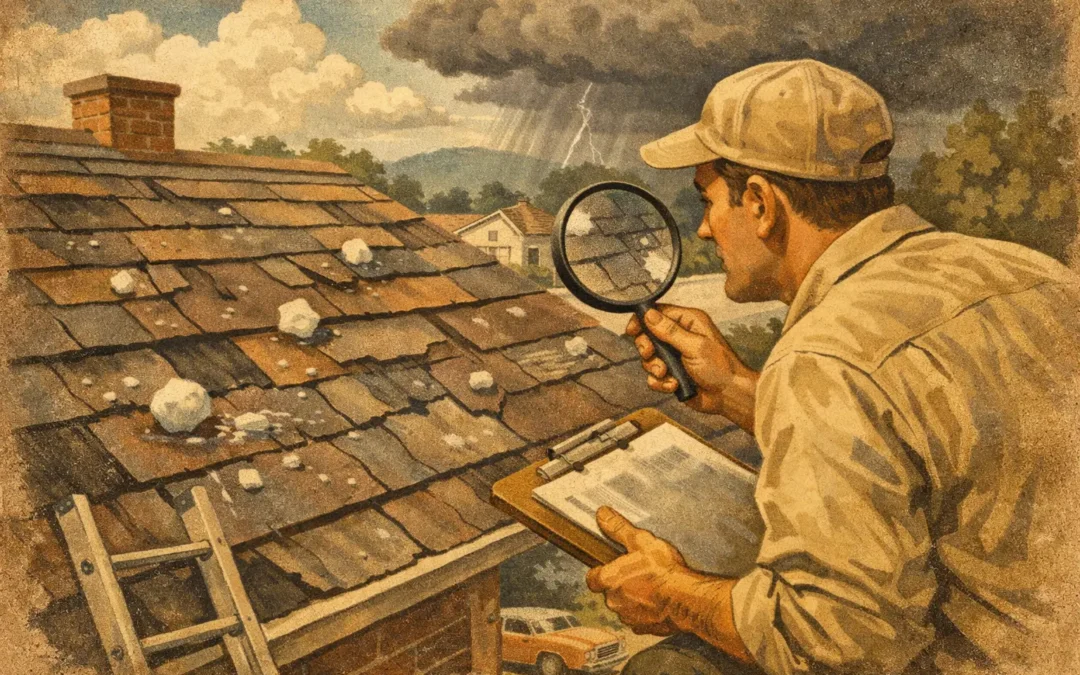
A roof can look fine from the driveway and still have real storm damage. That is what makes a hail damage roof inspection so important. After a North Texas storm, the obvious signs are not always the most serious ones, and waiting too long can turn a manageable repair into a leak, interior damage, or a much bigger insurance headache.
Homeowners often expect hail damage to be dramatic – split shingles, bent metal, missing sections. Sometimes it is. But just as often, hail leaves softer signs that only show up when someone gets on the roof and knows what to look for. A bruise in an asphalt shingle, displaced granules, impact marks on vents and flashing, or damage around roof penetrations can all point to trouble that is easy to miss from the ground.
What a hail damage roof inspection should actually cover
A proper inspection is more than a quick glance and a few photos. The goal is to determine whether the hail affected the roof’s ability to shed water and hold up over time, not just whether it left cosmetic marks.
That means looking at the shingles themselves, but also the surrounding components that often take a beating during a storm. Ridge caps, flashing, pipe boots, roof vents, gutters, downspouts, skylights, window screens, soft metals, and even exterior HVAC covers can all help confirm the size, direction, and severity of the hail. Those details matter because storm damage rarely shows up in just one place.
An experienced roofer also looks for patterns. Random wear from age is different from concentrated storm strikes. Blistering from heat is different from fresh hail impacts. Mechanical damage from foot traffic is different from wind-driven hail. This is where experience counts. A bad call in either direction can cost a homeowner money – either by missing legitimate damage or by recommending work that is not truly needed.
Why timing matters after a storm
The best time for a hail damage roof inspection is soon after the storm, even if you do not see a leak. That does not mean the roof needs to be replaced every time it hails. It means the roof needs a fair, informed assessment while the evidence is still clear.
There are a few reasons timing matters. First, fresh impact marks are easier to identify before normal weathering softens the edges. Second, if there is a valid insurance claim, documentation is stronger when it is tied closely to the storm event. Third, small areas of damage can allow water in over time, especially around flashing and penetrations, and those problems tend to get more expensive the longer they sit.
In places like Waxahachie and the greater DFW area, roofs can take repeated hits over the years. One storm may not finish a roof off, but it can weaken it enough that the next storm or a stretch of summer heat pushes it over the edge. That is another reason a timely inspection helps. It gives you a clear starting point instead of guesswork months later.
What roofers look for during a hail damage roof inspection
Asphalt shingles usually get the most attention because they are common and because hail often damages them in ways that affect performance. A roofer will check for impact bruising, granule loss, exposed asphalt mat, fractured shingle surfaces, and torn or loosened tabs. Those signs suggest the shingle may age faster or fail earlier than it should.
Metal components tell an important part of the story too. Dents in flashing, vents, turbine caps, gutters, and roof jacks can indicate where hail made contact and how severe it was. Soft metals often show impact more clearly than shingles do, which can help support the overall findings.
The inspection should also include seals and transition points. Valleys, chimney flashing, wall flashing, vent boots, and skylight edges are common trouble spots after hail. Even when shingles survive reasonably well, these accessories can crack, shift, or open just enough to let water through.
Inside the property, the inspector may check the attic or ceilings if there are signs of active moisture. Not every hail inspection requires an interior review, but if there is staining, a musty smell, or a recent drip, it becomes part of the bigger picture.
Cosmetic damage versus functional damage
This is where many homeowners get mixed messages. Not every mark from hail means the roof has lost its service life. Some dents on metal accessories are mostly cosmetic. On the other hand, some damage that looks minor at first can shorten the life of the roofing system.
The difference usually comes down to whether the hail compromised the material’s ability to protect the structure. If shingles have lost granules in a way that exposes the underlying mat, if the shingle has bruised and fractured, or if flashing and seals are no longer watertight, the damage is functional. That matters for repairs, long-term performance, and often insurance considerations.
There is not always a one-size-fits-all answer. A newer roof with isolated damage may only need targeted repairs. An older roof with widespread impacts, existing wear, and brittle materials may be a better candidate for replacement. Honest advice matters here. Homeowners need someone who can explain the condition clearly, not push the most expensive option by default.
How inspections help with insurance claims
One of the biggest reasons to schedule a hail damage roof inspection is documentation. If the storm caused legitimate damage, the inspection creates a record of what happened and where. Good photos, measured notes, and a clear explanation of affected materials can make the claims process smoother.
Insurance carriers want evidence, not assumptions. They may look at the date of loss, the condition of the roof before the storm, the number of slopes affected, and whether the damage appears consistent with hail. A thorough contractor inspection helps the homeowner walk into that process prepared.
It also helps prevent confusion. Homeowners are sometimes told they only need a patch, or that they need a full replacement, without a clear reason either way. A reliable roofer should be able to explain the scope in plain language. If the insurance adjuster visits the property, having a contractor who understands storm damage and can point out the relevant findings can reduce back-and-forth and missed items.
Accent Roofing has built its reputation around this kind of hands-on support because storm damage is stressful enough without having to sort through the process alone.
Common mistakes homeowners make after hail
One of the most common mistakes is waiting until a leak shows up. By then, the damage has already had time to worsen. Another is assuming that if the neighbor is filing a claim, the same must be true for every roof on the street. Storm paths can be uneven, and roof condition before the storm matters.
Homeowners also get into trouble when they rely on a ground-level opinion only. Binoculars can help spot obvious issues, but they do not replace an up-close inspection. And after major storms, it is wise to be cautious about anyone who knocks on the door offering immediate repairs before a proper assessment is done.
The best approach is steady and practical. Get the roof inspected, get the findings documented, ask questions, and make a decision based on condition rather than pressure.
When repair makes sense and when replacement is the better call
A hail damage roof inspection should lead to a clear recommendation, but the right next step depends on what the inspection finds. If the damage is limited to one area and the rest of the roof is in solid shape, a repair may be the sensible choice. That keeps costs down and addresses the problem without unnecessary work.
If damage is spread across multiple slopes, if matching materials are no longer available, or if the roof was already near the end of its life, replacement may offer better value. It is not just about what can be fixed today. It is about whether the roof will continue protecting the property without repeated issues over the next few years.
That is especially true for older roofs in North Texas, where hail, heat, and wind tend to work together. Sometimes the cheapest short-term fix becomes the more expensive long-term decision.
What homeowners should expect from the inspection process
The process should be straightforward. A roofer arrives, examines the roof and related exterior components, documents any signs of hail impact, and explains what those findings mean. If there is damage, the next steps should be clearly laid out. If there is not, that should be said plainly too.
Good communication matters as much as technical skill. Homeowners should not be left guessing about whether the damage is serious, whether an insurance claim is worth pursuing, or whether they can safely monitor the roof for now. The inspection should bring clarity and lower stress, not add more confusion.
After a storm, peace of mind usually comes from getting real answers early. A careful hail damage roof inspection does exactly that. It gives you a clear picture of your roof’s condition, helps you avoid costly delays, and lets you make the next decision with confidence instead of worry.
Great content! Keep up the good work!