
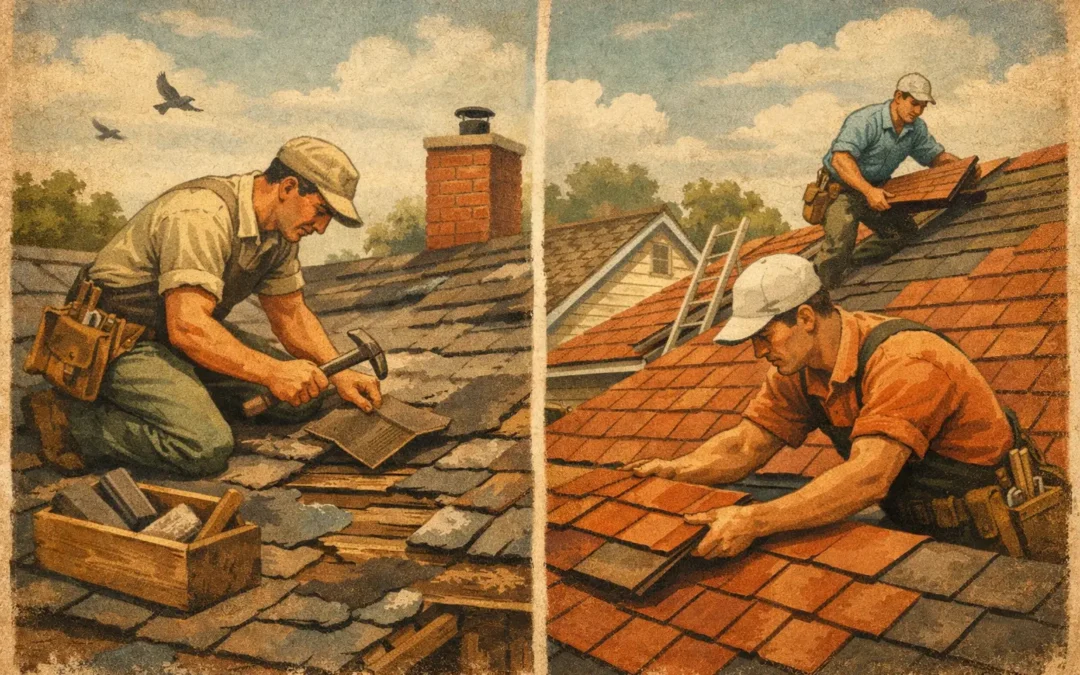
A roof decision usually gets forced on you at the worst time – after a hard storm, during an active leak, or when a small stain on the ceiling turns into a bigger question about what is really going on overhead. When homeowners start weighing roof repair vs roof replacement, they are usually trying to answer one thing: what fixes the problem without wasting money?
The honest answer is that it depends on the age of the roof, the type of damage, how widespread the issue is, and whether you are trying to buy a few more years or solve the problem for the long haul. A good contractor should not push a full replacement when a solid repair will do the job. Just as important, they should not patch a failing roof over and over when replacement is the smarter investment.
How to think about roof repair vs roof replacement
Roof repair is usually the right path when the problem is limited and the rest of the system still has good life left in it. That might mean a small leak around flashing, a section of missing shingles after wind, a few lifted tabs, or damage isolated to one slope of the roof. In those cases, a targeted repair can restore performance and keep your home protected without the cost of a full tear-off.
Roof replacement makes more sense when the roof is near the end of its service life or the damage is too widespread to treat as a one-off issue. If leaks are showing up in multiple areas, shingles are brittle or badly worn, decking has been compromised, or prior repairs keep failing, replacement often saves money over time because it addresses the whole system instead of chasing symptoms.
That is the key difference homeowners need to keep in mind. Repair addresses a specific problem. Replacement addresses the condition of the entire roof.
When a repair is the smart move
A repair is often the better choice when the roof is still structurally sound and the damage has a clear, limited cause. If a recent storm tore off a section of shingles but the rest of the roof is in good shape, replacing the damaged area may be all that is needed. The same goes for pipe boot failures, flashing issues around chimneys or walls, and isolated punctures from debris.
Age matters here. If your asphalt shingle roof is relatively young and has been maintained well, a repair usually carries more value. There is little sense in replacing an entire roof that still has years of service left because of one problem area.
Repairs can also be the right short-term option when timing matters. Some homeowners are preparing to sell, planning a remodel later, or dealing with a deductible or budget issue after a storm. In those situations, a repair can stabilize the roof and prevent interior damage while you plan for a larger project down the road.
That said, a repair only works if it truly solves the issue. If the fix is just a temporary patch on a roof with multiple weak points, you may end up paying twice.
Signs your roof may only need repair
A repair is often enough when damage is confined to one area, leaks are recent and traceable, shingles match reasonably well, and the roof is well below the end of its expected lifespan. You also want to see that the decking underneath is still solid and that ventilation or moisture problems are not affecting the entire structure.
This is where a thorough inspection matters. What looks like a simple leak from inside the house can come from flashing, underlayment, nail pops, storm impact, or even poor attic ventilation. The right diagnosis is what separates a lasting repair from another callback.
When replacement is the better investment
There comes a point when repairs stop being practical. A roof that has reached that stage will usually tell on itself. You may see widespread granule loss, curling or cracked shingles, multiple leak points, soft decking, repeated storm damage, or sagging that suggests deeper structural concerns.
If your roof is getting close to the end of its expected lifespan, a replacement can be the more responsible choice even if a repair seems cheaper today. Spending money on a roof that is already worn out can feel frustrating, especially when the repair estimate looks manageable. But if you are going to face another leak, another emergency call, and another interior stain in the next season or two, the cheaper option may not actually be cheaper.
Replacement also becomes the better choice when matching materials is difficult. On older roofs, existing shingles may be discontinued, faded, or too brittle to blend properly with new work. A patch may stop the leak but leave a noticeable mismatch or create another weak transition point.
For many North Texas homeowners, storm history is part of this discussion too. Hail and wind can shorten a roof’s life even when the damage is not obvious from the ground. A roof that has taken several rounds of weather over the years may look acceptable until close inspection shows bruising, lifted seals, and cumulative wear that makes future performance questionable.
Cost is important, but it is not the whole decision
Most homeowners start here, and that makes sense. Repair costs less upfront than replacement in most cases. But the better question is not just, what costs less today? It is, what gives you the best value over the next five to ten years?
A well-executed repair on a healthy roof can absolutely be the best value. It solves the problem, protects the home, and avoids unnecessary expense. On the other hand, repeated repairs on an aging roof can become expensive fast. If you have paid for leak work more than once, especially in different areas, that pattern matters.
There are also hidden costs to waiting too long. Water intrusion can damage insulation, ceilings, framing, drywall, flooring, and personal belongings. Mold risk increases when moisture sits undetected. What starts as a roof question can turn into a much bigger restoration bill.
That is why experienced contractors look at total cost, not just immediate price. A replacement is a larger project, but it can also provide a fresh warranty, better ventilation options, improved energy performance, and peace of mind during the next storm season.
Insurance can affect the answer
After storm damage, roof repair vs roof replacement is not always decided by the homeowner alone. Insurance coverage may come into play depending on the cause and extent of the damage. If a storm has created widespread loss across the roofing system, a replacement may be justified through the claim process. If damage is limited, the insurer may approve only a repair.
This is one reason documentation matters. Photos, inspection notes, and a clear explanation of what is damaged and why can make a big difference. Homeowners should understand that insurance does not pay for old age or wear and tear. It generally responds to covered damage from a qualifying event.
The process can be stressful, especially when you are already dealing with leaks or visible damage. A contractor who knows how to inspect properly, communicate clearly, and help you understand the claim side of the job can take a lot of pressure off your shoulders.
What a trustworthy inspection should tell you
A real inspection should do more than give you a number. It should explain the condition of the shingles, flashing, underlayment, decking, ventilation, and any storm-related issues. It should also answer a practical question: if this roof is repaired, how much useful life is likely left?
That last part matters. If a contractor says your roof can be repaired, ask whether they would expect that repair to hold up for years or whether you are buying time. There is nothing wrong with buying time if that is your plan. The problem is when nobody says that part out loud.
You should also expect honesty about trade-offs. A repair may be less expensive but may not match perfectly. A replacement may cost more but reset the clock. A contractor with integrity will walk you through those realities in plain language.
Accent Roofing has built its reputation around that kind of straightforward guidance because homeowners deserve clear answers, especially when the stakes are high.
The choice comes down to condition, not pressure
If your roof has isolated damage and solid years left, repair is often the right call. If your roof is worn out, leaking in multiple places, or showing signs of system-wide failure, replacement is usually the safer and more cost-effective move.
The best decision is the one based on evidence, not fear and not a sales pitch. Get the roof inspected thoroughly. Ask how much life is left. Ask whether the problem is local or widespread. Ask what happens if you wait.
A good contractor will not make the decision for you. They will give you the information to make it with confidence, and that is what most homeowners need most when a roof problem lands at the wrong time.