
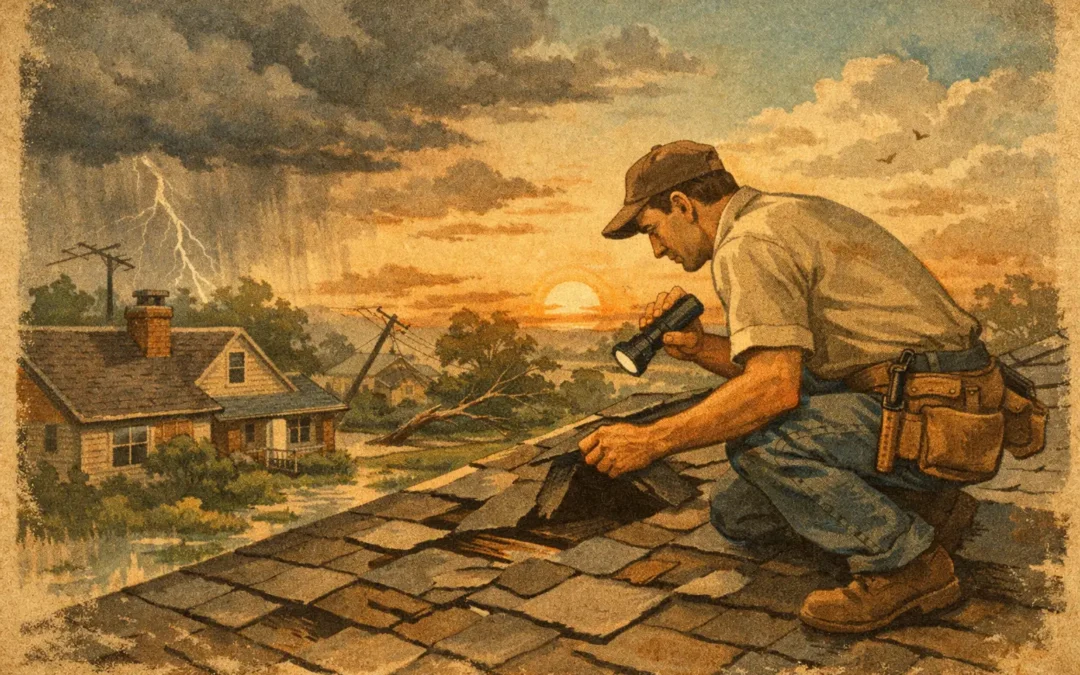
A North Texas storm can leave damage that is easy to miss. Hail may bruise shingles without creating an obvious leak. Wind can lift a small section of roofing that later fails during the next hard rain. This guide to post storm roof inspection helps you spot warning signs, protect your home, and know when a professional inspection is the safer choice.
Start after the storm has fully passed. Stay off a wet roof. Avoid downed power lines, broken branches, and standing water. A careful inspection from the ground and inside your home can reveal a great deal.
Start With Safety, Not the Roof
Your first job is protecting people and property. Do not climb a ladder during high winds, lightning, or wet conditions. Even dry shingles can be slippery after a storm. If a tree limb is resting on the roof, keep everyone away from that area. The roof structure may be under stress.
Walk around the home in daylight. Bring your phone or camera. Take clear photos from several angles. Document visible damage before moving debris, if it is safe to do so. These photos can help a roofing contractor understand the event. They may also help when you speak with your insurance carrier.
If water is entering the house, contain it first. Use buckets and towels. Move furniture, electronics, and valuables away from the affected area. Do not puncture a ceiling bulge unless you understand the risk. Wet ceilings can collapse without warning. Call a qualified professional if the leak is active or the ceiling is sagging.
What to Check From the Ground
A ground-level inspection is a smart first step. You do not need to walk on the roof to find many storm-related concerns. Look at each roof slope, the gutters, and the area around the home.
Watch for these common signs:
- Missing, cracked, curled, or visibly lifted shingles
- Shingles scattered in the yard or driveway
- Exposed dark spots where shingle granules are missing
- Bent, detached, or overflowing gutters
- Damaged flashing near chimneys, vents, skylights, and walls
- Fallen limbs, branch scrapes, or debris caught in roof valleys
- Dented metal vents, gutter screens, downspouts, or garage doors
Dented soft metals can be a useful hail indicator. They do not prove roof damage by themselves. A trained inspection is still needed to determine whether shingles have been affected.
Pay close attention to roof edges and ridges. Strong spring and early-summer winds often catch these areas first. A loose ridge cap or lifted starter shingle may seem minor. It can let wind-driven rain reach the roof deck.
Check the Attic and Ceilings
The attic often tells the real story. Inspect it only when the area is safe and adequately lit. Step only on framing members, not the ceiling drywall. If you are not comfortable entering the attic, inspect interior ceilings instead.
Look for fresh water stains, damp insulation, dripping, or dark marks on roof decking. A musty smell can also point to moisture. Check around vent pipes, chimneys, and attic vents. These penetrations are common leak locations after wind and heavy rain.
Inside the living area, inspect ceilings and upper walls. New yellow-brown staining, bubbling paint, soft drywall, or a damp spot near a light fixture deserves prompt attention. Water can travel along framing before it appears indoors. The stain may not sit directly below the roof opening.
A roof can have storm damage without an indoor leak. That is why a dry ceiling should not be the only test. Hail impact and wind damage may reduce a roof’s service life long before water enters the home.
Understand North Texas Storm Damage
North Texas roofs face a demanding mix of weather. Hailstorms can strike quickly across Mansfield, Arlington, Midlothian, and surrounding communities. High winds may follow severe thunderstorms. Heavy rain can then test every lifted shingle, seal, and flashing detail.
Hail damage can be subtle. On asphalt shingles, a trained roofer looks for impact marks that dislodge protective granules and damage the shingle surface. Normal aging can also cause granule loss. The distinction matters. So does the roof’s age, material, slope, ventilation, and previous repair history.
Wind damage is not always dramatic. Shingles may crease where they lifted and settled back down. Sealant strips can break. Fasteners can loosen. These concerns may be difficult to see from the ground, especially on steep roofs.
Rain exposes weak points but does not always cause them. An older flashing detail, a worn pipe boot, or debris in a valley may have been close to failure before the storm. An honest inspection should explain what appears storm-related, what is normal wear, and what needs repair now.
Avoid the Most Common Inspection Mistakes
The biggest mistake is climbing onto the roof without the proper equipment. Walking on shingles can cause damage, especially in hot weather or after hail. It also puts homeowners at risk of a serious fall.
Another mistake is waiting for a visible ceiling leak. Small openings can allow moisture into the roof system for weeks. By the time staining appears, insulation, decking, or framing may need additional work.
Do not assume every contractor at your door is a local long-term partner. Severe weather can bring aggressive storm-chasing crews into the area. Ask for a local business address, proof of insurance, clear written scope details, and references from nearby projects. Take time to review the estimate. A reputable contractor will answer questions without pressure.
Also, do not make permanent repairs before documenting the damage. Emergency steps, such as safely covering an opening, may be necessary. Take photos first when possible. Keep receipts for reasonable emergency mitigation. Then discuss the situation with your insurance carrier and roofing professional.
When to Schedule a Professional Roof Inspection
Call for a professional inspection after a hailstorm, significant wind event, falling tree debris, or any new interior water sign. It is also wise after a storm if your roof is nearing the end of its expected service life. Older roofs can be more vulnerable to lifted shingles and failed seals.
A thorough inspection should cover more than the visible shingle field. It should include flashing, valleys, ridge caps, vents, pipe boots, gutters, drainage paths, and accessible attic conditions. The contractor should explain findings in plain language. You should know whether the recommended path is monitoring, repair, or replacement.
Repair is often the right answer for a localized issue. A full replacement may make more sense when damage is widespread, the roofing system is aged, or matching materials are no longer practical. The best option depends on the roof’s condition and your long-term plans for the property.
For homes in areas with local permitting requirements, confirm that your contractor will follow the applicable city rules and inspection process. Requirements can vary by municipality. A dependable local roofer should handle this clearly and keep you informed.
If You May File an Insurance Claim
A roofing contractor can document visible storm damage and provide an estimate for needed work. Your insurance carrier makes coverage decisions under your specific policy. Review your policy, ask your carrier questions, and do not sign anything you do not understand.
Keep a simple file with storm-date notes, photos, inspection findings, repair estimates, and receipts. Clear records reduce confusion later. Be cautious of anyone promising a certain payout, offering to cover your deductible, or pressuring you to sign immediately. Texas homeowners deserve straightforward advice and honest pricing.
Accent Roofing has served North Texas with honesty and integrity since 1980. If a storm leaves you uncertain, a professional inspection can replace guesswork with a clear plan. The right next step is not always a replacement. It is knowing the true condition of your roof and protecting your home before the next storm arrives.